
Old English Sheepdog
The Old English Sheepdog (often called the “OES” or “bobtail”) is a shaggy herding and droving breed developed in England to help move livestock and guard the farm. While the name sounds ancient, the breed’s distinct type is generally traced back a couple of centuries, with strong roots in the working countryside.
Today, the OES is best known as a big, athletic companion with a distinctive rolling, “bear-like” gait and a famously abundant coat. They’re typically happiest as true family dogs—close to their people—rather than as an outdoor dog left to fend for itself.
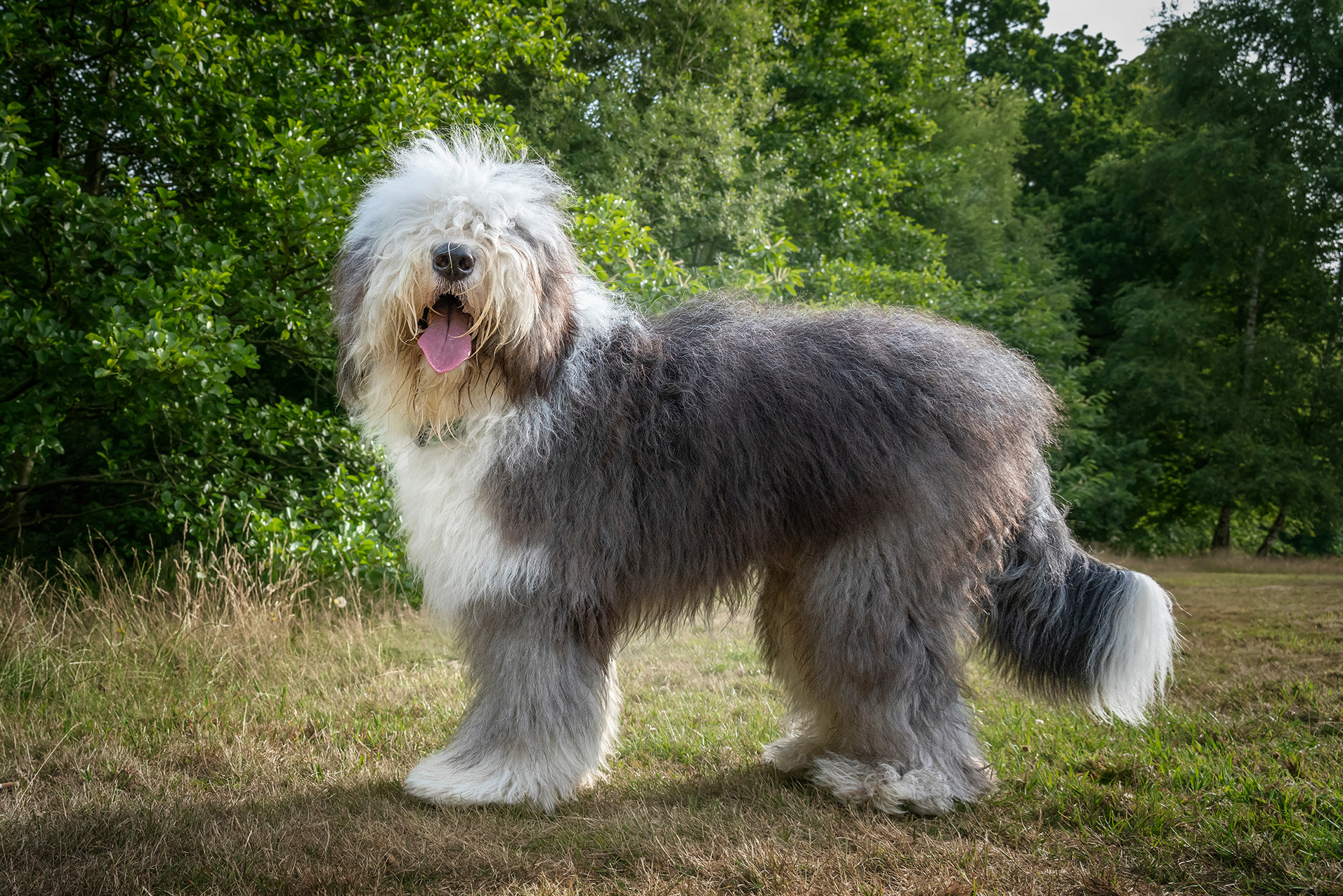
Description
The Old English Sheepdog, often affectionately known for its distinctive, shaggy coat, is a beloved and iconic breed recognized for its playful and gentle nature. Originating in England, this breed was primarily developed for herding sheep, particularly in the rugged, rural areas of the country. Its history dates back to the early 19th century, and it is believed to be a cross between various herding breeds, including the Bearded Collie and the Welsh Corgi, although the exact origins remain unclear. Originally known as the "Bobtail" due to its traditionally docked tail, the Old English Sheepdog has evolved into a symbol of charm and loyalty, known as much for its appearance as for its affectionate disposition.
Physically, the Old English Sheepdog is a large, robust, and powerful dog with a squarely built frame. Males typically stand between 21 to 24 inches at the shoulder and weigh 60 to 100 pounds, while females are slightly smaller. The breed's most striking feature is its long, dense coat, which gives the dog its distinctive appearance. The coat, which can come in various shades of gray, blue, or grizzle with white markings, is thick and profuse, providing insulation against harsh weather. While the coat is beautiful, it requires regular grooming to prevent matting and tangles, making care for an Old English Sheepdog a commitment in terms of both time and effort.
Old English Sheepdogs are known for their friendly, easygoing, and intelligent nature. These dogs are incredibly social and enjoy being around people, making them excellent family companions. They are particularly good with children and are often described as gentle giants due to their patient and tolerant demeanor. While they were originally bred for herding, Old English Sheepdogs are typically not aggressive and are more likely to approach a situation with calm curiosity rather than assertive dominance. Their friendly disposition also makes them good with other pets, although early socialization is important to ensure they get along with other animals.
In addition to their excellent temperament, Old English Sheepdogs are highly intelligent and trainable, although they can sometimes display an independent streak. They are eager to please their owners, but because of their strong herding instincts, they may try to "herd" people or other animals, especially in open spaces. As a result, consistent, positive reinforcement training is essential to help manage their natural instincts and ensure good behavior. These dogs are also quite energetic and require daily exercise to stay healthy and happy. While they are not overly demanding in terms of energy, they enjoy activities like walking, playing fetch, or even participating in dog sports, especially when their owners engage them in meaningful work or play.
Old English Sheepdogs are generally healthy, though, like all breeds, they can be prone to certain health issues, including hip dysplasia, eye problems, and respiratory issues due to their dense coat. Regular vet check-ups, a balanced diet, and proper grooming are necessary to maintain their health and well-being. The breed’s thick coat, while beautiful, can also require significant time and effort to care for, especially if kept in its full, natural length. As a result, many owners opt for professional grooming services to keep their dogs looking their best.
In summary, the Old English Sheepdog is a loyal, affectionate, and charming breed that makes an excellent companion for active families and individuals who are willing to invest time in grooming and exercise. With their large, fluffy coats, gentle nature, and endearing personalities, they continue to be a popular choice for those seeking a loving family dog. Whether herding, playing, or simply lounging by the fire, the Old English Sheepdog is a breed that brings joy and warmth to any household.
History
The Old English Sheepdog is a distinctive and iconic breed with a history that dates back to the agricultural regions of England in the late 18th and early 19th centuries. Despite its name, the breed's origins are not precisely documented, but it is believed to have been developed in western England, particularly in the counties of Devon and Cornwall. The Old English Sheepdog was bred to assist farmers with herding and driving sheep and cattle to market, excelling in its role due to its intelligence, agility, and stamina. Its shaggy, weather-resistant coat made it well-suited for working in the often harsh British climate.
The breed's lineage likely includes various European herding and drover dogs, such as the Bearded Collie and Russian Owtchar. By the mid-19th century, the Old English Sheepdog had gained a reputation as a hardworking and reliable drover. Farmers valued its ability to manage livestock effectively, and its distinctive docked tail became a symbol of its working status, as tax laws at the time exempted working dogs from being taxed if their tails were docked.
In the late 19th century, the Old English Sheepdog transitioned from a purely working breed to a show and companion dog. The breed was first exhibited in dog shows in England in the 1870s, and its popularity quickly spread to North America. The American Kennel Club (AKC) officially recognized the breed in 1888. Over time, its charming appearance and affable nature made it a favorite among families and dog enthusiasts. By the mid-20th century, the breed had become a symbol of pastoral elegance and was frequently featured in advertisements and films.
Today, the Old English Sheepdog is celebrated as a loyal and gentle companion, known for its intelligence and distinctive "shaggy" appearance. While it is less commonly used as a working dog, its rich history as a versatile and hardworking breed remains a source of pride for enthusiasts. Its evolution from a utilitarian drover to a beloved family dog reflects its adaptability and enduring charm.
Old English Sheepdog Hunting Ability and Traditional Roles
Appearance
Old English Sheepdogs are sturdy, compact, and powerful dogs with a profuse, shaggy coat that creates the classic “shaggy dog” silhouette. Many stand a bit lower at the withers than at the loin (a recognized breed characteristic), and their movement can show a gentle roll at a walk.
Coat texture is important: a harsh, shaggy outer coat with a dense undercoat. Color is commonly shades of gray, grizzle, or blue with white, and the head often has the recognizable “peak-a-boo” hair unless it’s trimmed or tied back for visibility.
Colors
• Black & White
• Blue
• Blue & White
• Blue Gray
• Blue Gray & White
• Blue Merle
• Blue Merle & White
• Brown & White
• Fawn & White
• Gray
• Gray & White
• Grizzle
• Grizzle & White
• White
Health
Like many larger breeds, Old English Sheepdogs can be prone to orthopedic issues, and thoughtful breeding plus keeping the dog lean can help reduce strain on joints. Breed clubs also emphasize screening for inherited issues such as eye problems and hearing concerns.
Work with a veterinarian on preventive care, dental health, and parasite control—especially important for dogs with heavy coats. If you notice chronic itching, recurring ear trouble, exercise intolerance, or changes in gait, address it early rather than waiting for it to become a bigger problem.
Care
Coat care is the make-or-break factor for most owners. Without regular brushing and combing, mats can form quickly, and a neglected coat can trap dirt and moisture. Many families either commit to a thorough grooming routine or keep the dog in a shorter “pet trim,” often with professional grooming support.
Beyond the coat, keep ears clean and dry, maintain nails, and pay attention to the skin—especially if the coat stays damp. Because their coat can hide weight changes and minor injuries, hands-on checks (feeling ribs, checking skin and feet) are worth making a habit.
Training
Start training early, focusing on polite greetings, leash manners, and calm behavior in the house. Reward-based methods work well, especially when training is turned into a game—these dogs often respond better to upbeat structure than to heavy corrections.
Because OES dogs can be exuberant, teach skills that support everyday management: a reliable recall, a “drop it/leave it,” and a strong “place/settle.” Ongoing socialization helps them stay confident and well-mannered as they mature.
Temperament
OES dogs are often mellow and agreeable with a playful streak—big, friendly clowns when they’re comfortable. Many are devoted to their family and can be watchful without being sharp, especially when they’re well socialized.
They’re intelligent and can learn quickly, but they may also be a little stubborn or “opinionated.” A combination of kindness, consistency, and enough daily activity usually produces the best version of the breed: steady at home, responsive in public, and fun to live with.
Lifestyle
OES dogs generally do best in homes where they’re included in daily life and get consistent exercise—walks, play sessions, training time, and mental enrichment. They’re not usually satisfied with being “yard dogs,” and they can become noisy or destructive if bored.
Their heavy coat can make hot weather harder, so plan summer activity around cooler hours and provide plenty of water and shade (and ideally air conditioning). They often love cooler seasons and can be enthusiastic companions for moderate outdoor adventures.
Ownership
This is a wonderful breed for people who want a big, friendly, distinctive-looking dog and are willing to do the grooming work. Before bringing one home, be honest about whether you can handle frequent brushing, regular professional grooming, and the household mess that comes with a heavy coat.
Choose breeders or rescues who prioritize temperament and health screening, and plan for training early so the dog’s size stays manageable. With the right commitment, an Old English Sheepdog can be an affectionate, entertaining family companion for many years.
Interesting Facts
- Origin: England; developed as a herding/droving farm dog.
- Nickname: often called the “bobtail,” tied to historical tail docking traditions.
- Look: compact, powerful build with a profuse shaggy double coat.
- Movement: known for a characteristic rolling, “bear-like” gait at a walk.
- Big owner reality: grooming is a major ongoing commitment (or plan for a short pet trim).
- Temperament: typically mellow and agreeable, playful, and devoted to family.