Herding Trials
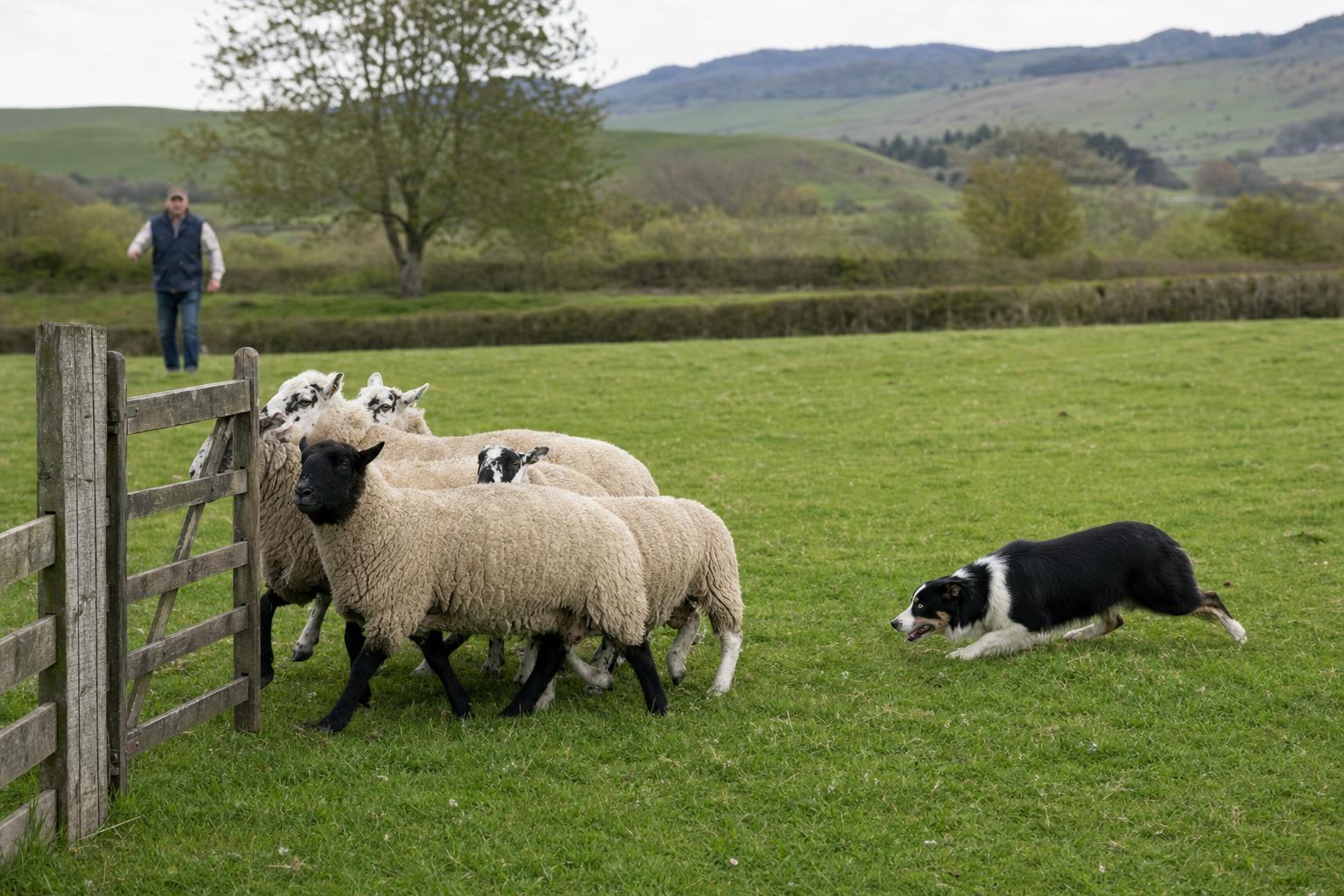
Herding trials are a structured way to showcase how well a dog and handler can manage livestock through a set of defined tasks. Think of it as a practical job turned into a test: can the dog gather stock cleanly, move them along a line, hold them to the handler’s direction, and complete chores like penning or sorting without turning the whole field into a stampede? Different organizations emphasize different styles—some favor wide, thoughtful gathers and long outruns, others emphasize close work and tight control—but the goal is the same: calm, efficient stock movement that demonstrates training and stock sense. When it’s done well, the work looks almost quiet. The dog applies just enough pressure, the stock flow in the intended direction, and the handler’s cues feel like small adjustments rather than constant correction.
The skills required are built the same way good farm work is built: foundations first, then complexity. Dogs learn flanks that actually reshape the line, stops that truly stop, and pace control that keeps livestock from breaking. Handlers learn to read stock, to position themselves so the dog can succeed, and to choose cues that match what the dog is seeing. Trials reward teams that can maintain control at distance, because real work often requires it. That means training for independence without losing connection. The dog must be willing to move away from the handler to gather stock, then bring them in on a line, and then take direction as the plan changes. It’s a strange combination: the dog must be confident enough to make decisions, and obedient enough to accept guidance.
Trial environments add their own pressure. The field is unfamiliar, the stock may behave differently, and the handler’s nerves can bleed into timing. A dog that looks perfect at home can get sticky or overexcited when everything changes. That’s why good teams proof in many places and with many types of stock, and why they train “boring” skills like settling between runs and waiting at the post. Another big piece is fairness to livestock. Good work does not rely on terror. It relies on pressure applied with judgment. Trials often penalize roughness, splits, and chaotic movement because those things are signs the dog is out of control or the handler is not reading the situation. In the best runs, stock move as if they chose it, which is the hallmark of correct pressure.
For many handlers, herding trials are addictive because they reveal the truth. You can’t fake stock work. Either the dog can hold a line, or it can’t. Either the handler can read a break and respond early, or they’re always chasing mistakes. The upside is that progress feels real and transferable. Better flanks make farm chores easier. Better stops make everything safer. Better pacing makes livestock calmer. Whether someone competes seriously or just uses trials as a training goal, the underlying value is the same: it encourages careful training, good stockmanship, and a dog that can do purposeful work with control.
- Australian Cattle Dog
- Australian Koolie
- Australian Shepherd
- Bearded Collie
- Beauceron
- Belgian Malinois
- Belgian Sheepdog
- Belgian Tervuren
- Border Collie
- Bouvier des Flandres
- Briard
- Canaan Dog
- Cardigan Welsh Corgi
- Collie
- Entlebucher Mountain Dog
- Finnish Lapphund
- German Shepherd
- Icelandic Sheepdog
- Norwegian Buhund
- Old English Sheepdog
- Pembroke Welsh Corgi
- Polish Lowland Sheepdog
- Puli
- Pyrenean Shepherd
- Shetland Sheepdog
- Swedish Vallhund