
Sheep Herding
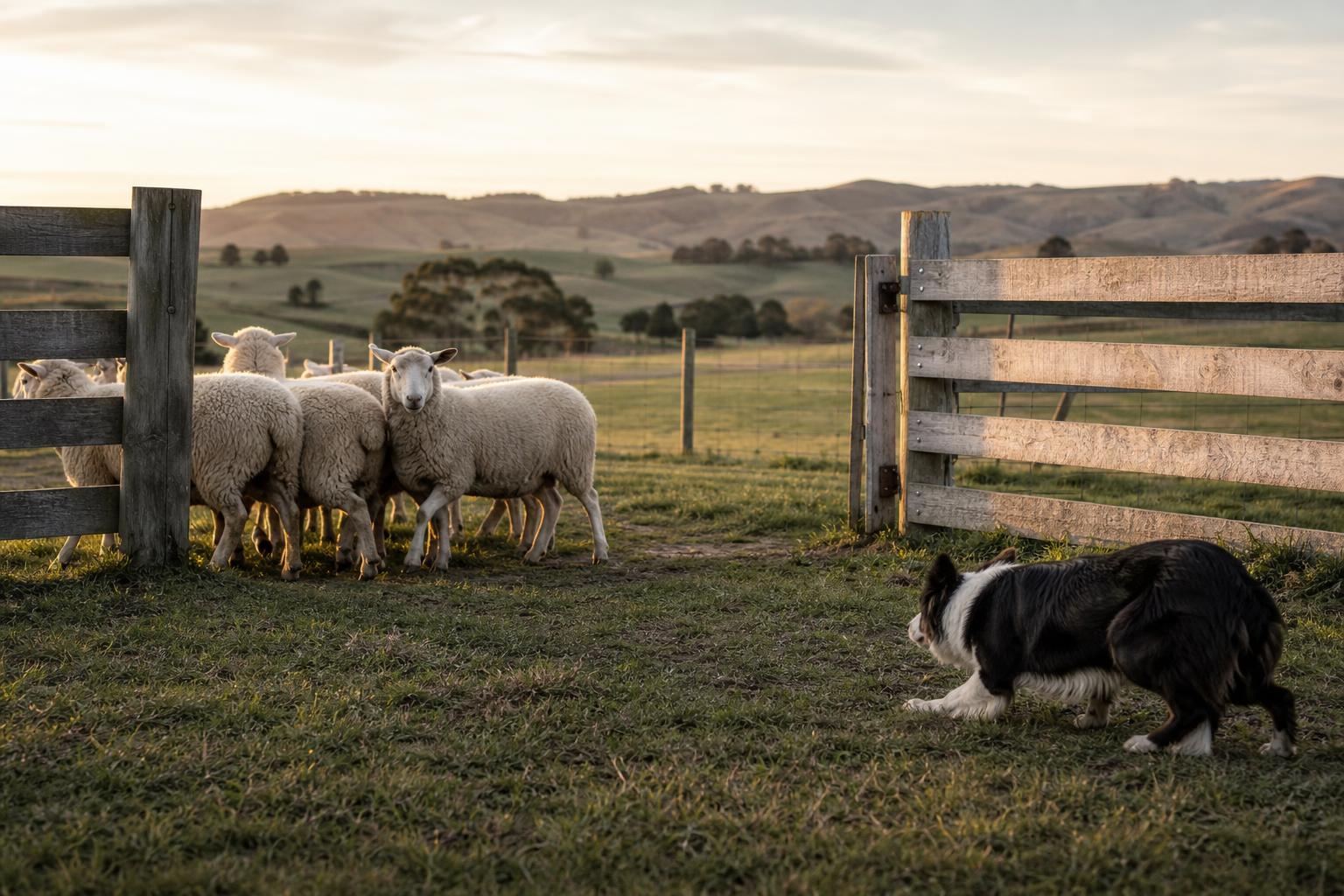
Sheep herding is the work of guiding sheep with a dog in a way that is efficient, safe, and calm. Sheep are prey animals; their first language is movement, and their first priority is avoiding pressure. A good dog learns to use that reality rather than fight it. The dog’s position and pace create a bubble of influence. Step into the bubble, the sheep move. Step off, they slow or stop. When the dog and handler understand that pressure picture, sheep handling becomes smoother and less stressful for everyone. In daily farm life, that can mean moving a flock through gates, down lanes, into pens, onto trailers, or away from hazards. In training fields, it often begins with simple gathering and holding before the more complex chores are added.
Training for sheep work usually starts by developing a dog that can stay thoughtful around stock. Many dogs have instinct to chase; the goal is to replace chasing with control. The dog learns flanks to move around the sheep rather than through them. It learns to stop on cue, because stopping is how you keep the flock together. It learns balance—finding the position that brings sheep toward the handler or the target point. The handler learns to stand in the right place and to keep cues clean, because sheep respond to the dog’s line, and the dog responds to the handler’s timing. Early sessions are short because sheep work is intense. A dog that gets over-aroused becomes rough. A dog that gets corrected too harshly can lose confidence. Good training keeps the dog successful and the sheep calm, even if that means doing less and ending earlier.
As skills grow, the dog learns to work at distance and to drive sheep away from the handler, not just fetch them back. Driving is a different mental skill: the dog has to hold a line behind the sheep and keep them moving forward, often without the natural “bring them to me” instinct that many dogs prefer. The dog also learns to shed (separate animals), to hold pressure on a gate, to cover an escape route, and to slow down when sheep begin to feel trapped. The handler learns to read the flock’s behavior—whether they’re light and ready to bolt, heavy and stubborn, or split-prone—and to adjust pressure accordingly. Sheep can change their mind fast, and the best teams respond before the break happens.
Done well, sheep herding produces a dog that is intense but controlled, and livestock that move without panic. It’s practical work, but it’s also a deep lesson in communication. Tiny changes in the dog’s path can change the flock’s movement. Tiny changes in the handler’s timing can change the dog’s confidence. Over time, the partnership becomes smoother: fewer commands, more understanding. When a dog quietly gathers a flock, holds them to a line, and threads them through a gate as if it were easy, you’re watching instinct shaped into skill—useful on a farm and beautiful in its own right.
- Australian Cattle Dog
- Australian Koolie
- Australian Shepherd
- Bearded Collie
- Beauceron
- Belgian Malinois
- Belgian Sheepdog
- Belgian Tervuren
- Border Collie
- Bouvier des Flandres
- Briard
- Canaan Dog
- Cardigan Welsh Corgi
- Collie
- Entlebucher Mountain Dog
- Finnish Lapphund
- German Shepherd
- Icelandic Sheepdog
- Norwegian Buhund
- Old English Sheepdog
- Pembroke Welsh Corgi
- Polish Lowland Sheepdog
- Puli
- Pyrenean Shepherd
- Shetland Sheepdog
- Swedish Vallhund