
Canine Good Citizen
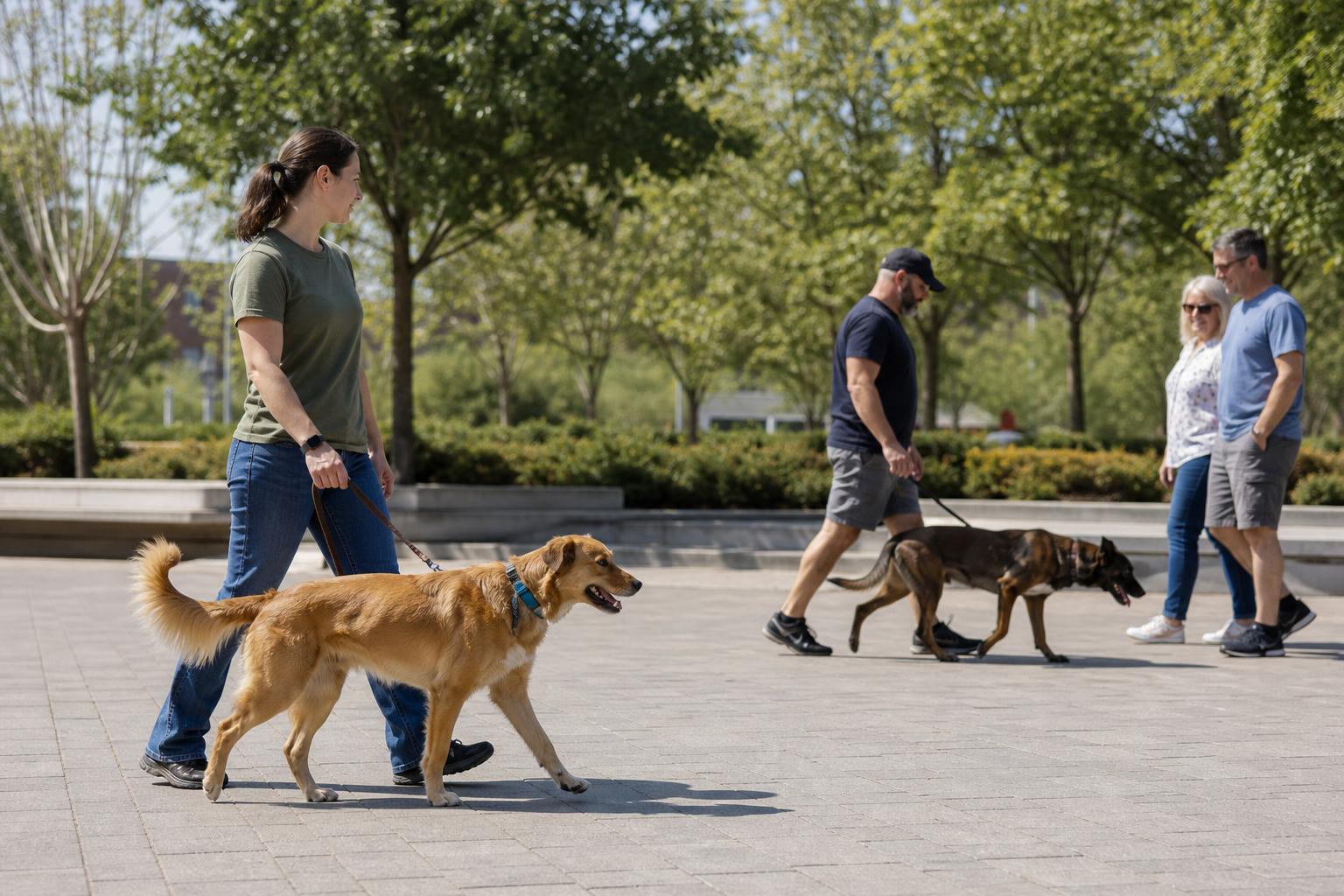
Canine Good Citizen (CGC-style) work is a structured approach to producing a dog that is safe, polite, and controllable in public. The behaviors are practical: accepting friendly strangers, walking through crowds, sitting for petting, holding a stay, coming when called, remaining calm around other dogs, and handling brief separation from the handler. It’s not about fancy precision; it’s about predictable behavior that reduces risk and increases access. Many people use it as a stepping stone toward therapy dog work, service dog training foundations, or simply being able to take the dog more places.
The training focus is often on clarity and emotional stability. The dog needs to understand cues like sit, down, stay, and come, but it also needs to cope with novel situations. That means practicing in many environments, not just at home. It means teaching polite greetings so the dog doesn’t jump on strangers. It means teaching the dog to accept grooming and handling without worry. It also means building the handler’s skills: staying calm, holding the leash consistently, and preventing situations where the dog rehearses the wrong behavior.
A smart approach builds the dog’s confidence first. You start in low-distraction settings, reward heavily, and increase difficulty slowly. If the dog struggles with another dog nearby, you create space and teach neutrality. If the dog is overly excited by people, you practice controlled greetings and reward four feet on the floor. If the dog is worried, you avoid flooding and instead make the environment feel safe through easy repetitions and predictable rewards. Over time, the dog learns that calm behavior is what makes the world open up.
The value of this kind of training shows up in day-to-day life: smoother walks, safer interactions, fewer surprises. It also changes how people view the dog, because a dog that can pass calmly through a crowd is a dog that earns trust. Whether you’re pursuing a formal evaluation or just using the checklist as a training plan, the end result is the same—a dog that behaves well because it understands what is expected and feels comfortable doing it.
- Affenpinscher
- Akita
- American Pit Bull Terrier
- Australian Cattle Dog
- Australian Koolie
- Australian Shepherd
- Bearded Collie
- Beauceron
- Belgian Malinois
- Belgian Sheepdog
- Belgian Tervuren
- Bernese Mountain Dog
- Biewer Terrier
- Black Russian Terrier
- Border Collie
- Bouvier des Flandres
- Boxer
- Briard
- Brussels Griffon
- Bullmastiff
- Canaan Dog
- Cane Corso
- Cardigan Welsh Corgi
- Cavachon
- Cavalier King Charles Spaniel
- Chihuahua
- Chinese Crested
- Chiweenie
- Collie
- Coton de Tulear
- Doberman Pinscher
- Dogue de Bordeaux
- English Toy Spaniel
- Entlebucher Mountain Dog
- Finnish Lapphund
- French Bulldog
- German Pinscher
- German Shepherd
- Giant Schnauzer
- Greater Swiss Mountain Dog
- Havanese
- Icelandic Sheepdog
- Japanese Chin
- Leonberger
- Maltese
- Mastiff
- Miniature Pinscher
- Neapolitan Mastiff
- Newfoundland
- Norwegian Buhund
- Old English Sheepdog
- Papillon
- Pekingese
- Pembroke Welsh Corgi
- Polish Lowland Sheepdog
- Pomeranian
- Poodle
- Pug
- Puli
- Pyrenean Shepherd
- Rottweiler
- Russian Black Terrier
- Saint Bernard
- Shetland Sheepdog
- Shih Tzu
- Shih-Poo
- Standard Schnauzer
- Swedish Vallhund
- Toy American Eskimo