
Belgian Tervuren
The Belgian Tervuren is one of the four varieties of Belgian Shepherd Dog and is prized for its combination of elegance, athleticism, and “all‑day” work ethic. Bred as a herding and general farm dog, the modern Tervuren is also seen in obedience, agility, tracking, protection sports, and search work—any job that rewards speed, brains, and drive.
In the home, they tend to form a tight bond with their people and can be affectionate and comedic, but they’re rarely a “laid-back” breed. Most thrive with a clear routine, daily training, and a handler who enjoys staying engaged rather than simply providing exercise.
As with many high-drive herding breeds, the Belgian Tervuren is usually best suited to experienced dog owners who want an active partner and are willing to manage alertness, sensitivity, and a tendency to be protective.
Description
The Belgian Tervuren is an elegant and intelligent herding dog known for its versatility, athleticism, and distinctive appearance. It is one of the four varieties of Belgian Shepherds, along with the Belgian Malinois, Belgian Laekenois, and Belgian Sheepdog. Originally bred in Belgium for herding sheep and protecting livestock, the Belgian Tervuren excels in a wide range of activities, including obedience, agility, search-and-rescue, and protection work.
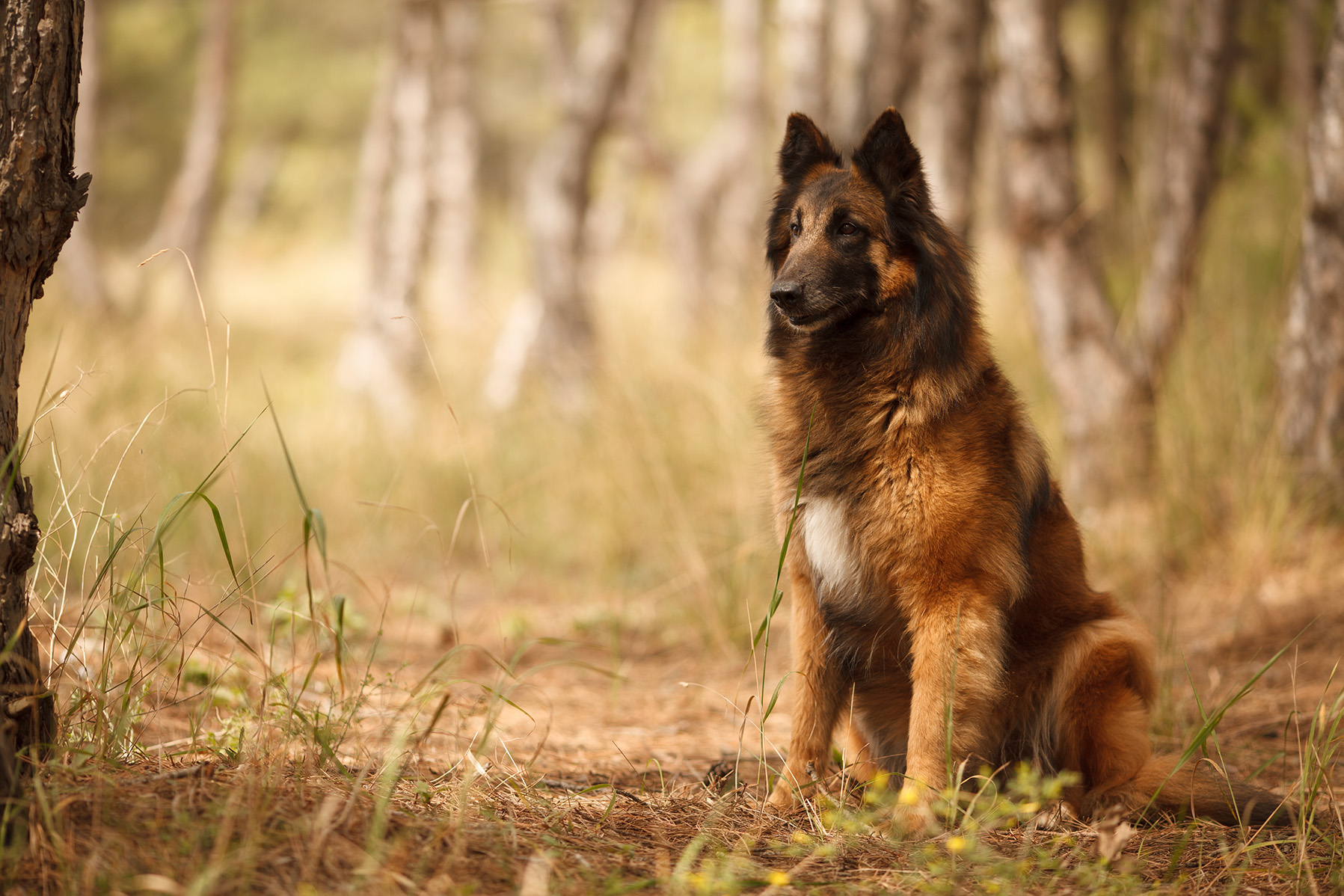
Physically, the Belgian Tervuren is a medium-sized dog with a well-balanced, athletic build. It has a dense double coat, typically fawn or mahogany in color, with a distinctive black overlay, especially on the face, ears, and tail. The breed’s coat is long and flowing, which gives it a refined and graceful look. The Tervuren has a proud and alert expression, with almond-shaped eyes and erect ears, contributing to its intelligent and attentive appearance.
The Belgian Tervuren is known for its intelligence, energy, and work ethic. It is an active breed that thrives on mental and physical challenges, making it ideal for owners who can provide regular exercise and tasks to engage its mind. The breed is highly trainable, eager to please, and excels in obedience training, but it also has an independent streak, so consistent and positive reinforcement is essential. Early socialization is crucial to ensure the Tervuren is well-adjusted and comfortable in a variety of situations and around other people and animals.
Despite its working background, the Belgian Tervuren is affectionate with its family and is typically good with children and other pets, although it can be reserved or aloof with strangers. It is known for its strong protective instincts and can make an excellent guard dog if needed, but this also means that early training and proper handling are essential to ensure that it is well-mannered and responsive.
Overall, the Belgian Tervuren is a highly intelligent, energetic, and loyal breed best suited for active individuals or families who can provide the training, exercise, and mental stimulation this breed needs. With proper care, the Belgian Tervuren makes an excellent companion, versatile working dog, and loving family member.
History
The Belgian Tervuren is one of four closely related Belgian herding breeds, sharing its lineage with the Groenendael (Belgian Sheepdog), Malinois, and Laekenois. Named after the village of Tervuren in Belgium, this variety traces its roots to the late 19th century. During that time, a concerted effort led by Belgian veterinarian Professor Adolphe Reul sought to identify and standardize the native herding dogs of the region. Though these dogs came in various colors and coat types, they shared the same underlying working instincts and conformation. Through careful selection and breeding, the Tervuren emerged as the long-haired, fawn-to-mahogany-colored variety with a characteristic black overlay.
Historically, the Tervuren excelled as a herder of sheep and cattle, prized by Belgian farmers for its intelligence, agility, and protective nature. When industrialization began reducing the demand for dedicated herding dogs, the breed’s versatility allowed it to adapt to new roles. Belgian Tervurens soon found a niche in police and military work, where their keen senses and trainable temperament made them stand out as dispatch carriers, guard dogs, and search-and-rescue animals. Their bravery and reliability were especially valued during World War I and II, contributing to the breed’s growing reputation outside Belgium.
In the United States, the Belgian Tervuren was recognized by the American Kennel Club (AKC) as part of the “Belgian Sheepdog” family for many years. It wasn’t until the late 20th century that the Tervuren gained separate breed status, clarifying its distinctive coat and coloration. Today, the Tervuren retains its innate drive to work and thrives in activities like obedience, agility, herding trials, and protection sports. Thanks to its elegant appearance, intellectual curiosity, and enduring loyalty, the Belgian Tervuren has found a place not only as a stalwart working companion but also as a cherished family member around the world.
Belgian Tervuren Hunting Ability and Traditional Roles
Appearance
Belgian Tervurens are medium-sized, squarely built herding dogs with a proud carriage and a distinctly elegant outline. Their expression is keen and intelligent, with dark, alert eyes and a black mask that frames the face.
The coat is moderately long with a dense undercoat and more profuse furnishings on the neck, chest, and tail—especially in mature males. Color typically ranges from warm fawn to rich mahogany, overlaid by black tipping (often called “black overlay”), giving the coat depth and shading.
Overall, the breed should look agile and capable rather than heavy: a dog built to trot for miles, turn quickly, and work in all weather.
Colors
• Black
• Brindle
• Cream & Black
• Fawn & Black
• Fawn & Liver
• Gray & Black
• Mahogany & Black
• Mahogany & Liver
• Silver & Black
Health
Like many medium-to-large working breeds, orthopedic and eye health are common focus areas. Breed-club guidance often emphasizes hip and elbow evaluation as the dog matures, along with routine eye exams by a veterinary ophthalmologist.
A well-bred puppy from health-tested parents is one of the best risk reducers. Ask breeders for documented results (for example, orthopedic certifications and eye exam records) and for a candid discussion of health trends in their lines.
Owners should also take bloat (gastric dilatation-volvulus) precautions seriously: feed measured meals, avoid intense exercise immediately around mealtimes, and learn the warning signs. Maintain a lean body condition and keep up with dental care, parasite prevention, and routine checkups for long-term wellbeing.
Care
Plan on regular grooming. The Tervuren’s double coat sheds year-round and often “blows coat” seasonally, so brushing several times a week (and more during heavy shed) helps prevent matting and keeps hair manageable.
Daily exercise needs are real, but it’s not just about miles. A mix of brisk physical activity and structured brain work—obedience drills, scent games, agility foundations, or herding-style outlets—usually produces a calmer dog than exercise alone.
Because they’re often alert and environmentally aware, many do best with a predictable home routine and a quiet place to settle. Teaching an “off switch” (relax on a mat, crate rest, calm rewards) is a practical part of care for this breed.
Training
Belgian Tervurens typically respond best to clear, upbeat training with lots of reinforcement and variety. They learn quickly, but they can also get bored with repetition; short sessions sprinkled throughout the day often work better than long drills.
Prioritize early socialization and impulse control: loose-leash walking, recall, “leave it,” and calm greetings. Their natural protectiveness and herding instincts benefit from channeling—teach appropriate alerting, then reward disengagement and quiet.
If you want to pursue advanced sports, build foundations slowly (body awareness, engagement, toy/food mechanics) and protect joints in the growing puppy. With consistent structure, they can excel in demanding disciplines like obedience, tracking, and agility.
Temperament
A good Tervuren is bright, self-assured, and intensely attentive to its person. Many are affectionate with family while remaining naturally reserved with strangers, and they often take their “watchdog” role seriously.
They are quick learners and problem-solvers, which can be a gift or a headache depending on the household rules. Without enough mental work, they may invent their own entertainment—alert barking, shadowing movement, or herding/nipping at fast-moving kids and pets.
Their sensitivity and reactivity can show up as noise awareness, startle, or over-arousal if not thoughtfully socialized. Early, positive exposure to people, dogs, and environments helps them grow into stable, confident adults.
Lifestyle
This breed fits best in an active household that enjoys training as a hobby, not a chore. A fenced yard can help, but it won’t replace purposeful activity; many Tervurens are happiest when they have a “job,” even if that job is structured games, classes, or sport work.
Because they’re alert and people-focused, they often struggle with being left isolated for long hours. Providing enrichment (food puzzles, scent work, rotate toys) and gradually building alone-time skills can prevent boredom behaviors.
They can adapt to different living situations if their needs are met, but they’re generally not ideal for a low-activity home or for owners who want a dog that is universally social with strangers and other dogs.
Ownership
Choose a Belgian Tervuren if you want a smart, athletic partner and you’re ready to invest in training, socialization, and ongoing outlets. They tend to do best with owners who set boundaries kindly but consistently and who enjoy learning alongside their dog.
When selecting a breeder, look for transparent health testing, stable temperaments, and puppies raised with thoughtful early exposure. Meet adult dogs in the program if possible; temperament predictability matters as much as looks.
If you adopt through rescue, ask about the dog’s experience with handling, other animals, and busy environments. With the right match and routine, Tervurens can be deeply loyal companions—but they’re rarely a “plug-and-play” breed.
Interesting Facts
• Variety of Belgian Shepherd Dog; known for a fawn-to-mahogany coat with black overlay and a black facial mask.
• Bred for herding and farm work; commonly seen today in performance sports like obedience, agility, and tracking.
• Typically bonds closely to family and can be reserved with strangers; early socialization is especially important.
• Needs both physical exercise and mental work—training and problem-solving are part of “daily maintenance.”
• Regular coat care is required, with heavier shedding seasonally.
• Health stewardship often includes hip/elbow evaluations and routine eye exams in mature dogs.