
Portuguese Water Dog
The Portuguese Water Dog (PWD) is an energetic, athletic working breed from Portugal, historically developed to assist fishermen. These dogs were used for water work such as swimming between boats, retrieving gear, and carrying messages—jobs that demanded endurance, trainability, and a love of water.
As a companion, the PWD is typically bright, people-oriented, and happiest when it has regular exercise and a purpose. It’s a strong choice for active households that enjoy training, outdoor time, and (ideally) water activities.
Description
The Portuguese Water Dog is a highly energetic and versatile breed originally developed in Portugal for working alongside fishermen. Known for its impressive swimming abilities and strong work ethic, the breed was used for tasks such as herding fish into nets, retrieving fishing nets, and even rescuing people who fell overboard. With a history dating back over a thousand years, the Portuguese Water Dog was an essential partner to Portuguese fishermen, thriving in the country’s coastal waters. The breed’s role as a water worker has led to its exceptional swimming prowess and natural affinity for water-related activities.
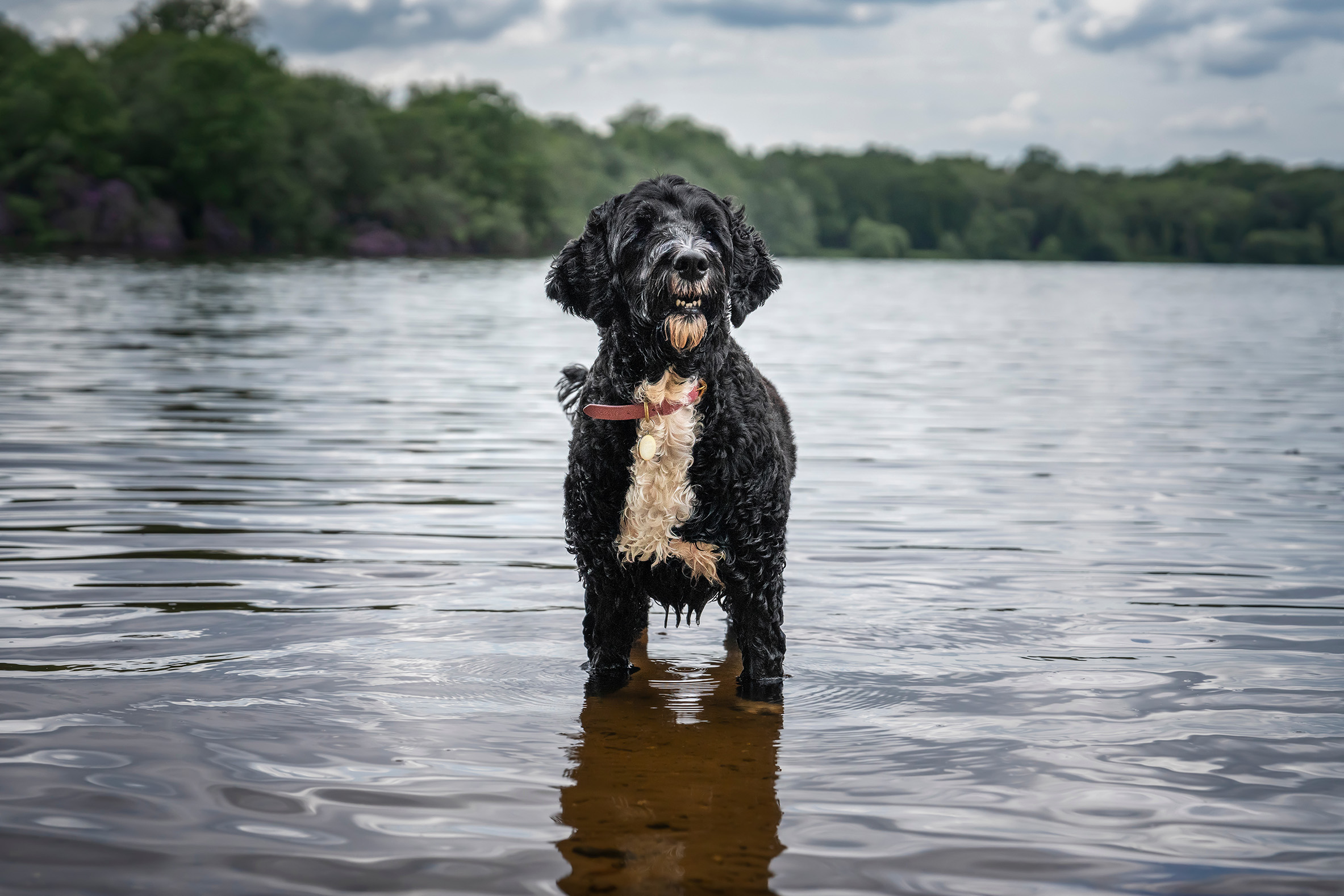
Physically, the Portuguese Water Dog is a medium-sized dog with a strong, muscular build that reflects its working background. Typically standing between 17 to 23 inches at the shoulder and weighing 35 to 60 pounds, this breed is agile, with webbed feet that make it an excellent swimmer. Its coat is dense, curly, and water-resistant, designed to protect the dog while working in the water. The breed comes in two coat types: curly and wavy, both of which require regular grooming to keep them healthy and tangle-free. Coat colors include black, white, brown, and combinations of these, often with patches or markings.
In terms of temperament, the Portuguese Water Dog is intelligent, loyal, and eager to please, making it highly trainable. These dogs are known for their strong bond with their families and are typically very affectionate and protective. They are good with children and other pets, although their energetic and playful nature can sometimes be overwhelming for smaller animals. Portuguese Water Dogs are known for their high energy levels and require regular physical and mental stimulation. They thrive in environments where they can stay active, such as homes with access to water or large, secure yards where they can run and play.
The Portuguese Water Dog’s natural love for water and strong working instincts make it an ideal candidate for dog sports such as water trials, obedience, and agility. They also excel in activities like swimming, dock diving, and search-and-rescue work. With proper training and sufficient exercise, they make excellent companions for active families or individuals who enjoy outdoor activities. The breed’s combination of intelligence, athleticism, and devotion makes the Portuguese Water Dog not only a dedicated worker but also a loyal and loving family companion. This unique breed continues to thrive in homes that can provide the activity and stimulation it needs to remain happy and healthy.
History
The Portuguese Water Dog, or Cão de Água Português, is an ancient and versatile breed with origins deeply rooted in Portugal’s seafaring history. This breed was developed centuries ago to assist fishermen along the Portuguese coast, where it became an invaluable working companion. Portuguese Water Dogs were used for a variety of tasks, including herding fish into nets, retrieving lost fishing gear, and acting as couriers between boats or from ship to shore. Their strong swimming abilities, intelligence, and waterproof coat made them ideally suited for these roles, earning them the nickname "dog of the water."
The breed’s exact origins are unclear, but it is believed to descend from ancient working dogs that arrived in the Iberian Peninsula with Moors or other early traders. Over time, Portuguese fishermen refined the breed to excel in maritime work. The dogs became integral to the fishing industry, particularly in the Algarve region, where their assistance was vital in a trade that required strength, endurance, and close collaboration with humans.
By the mid-20th century, as modernization reduced the need for traditional fishing practices, the Portuguese Water Dog faced a steep decline in population. The breed was rescued from near extinction by Vasco Bensaude, a wealthy Portuguese shipping magnate and dog enthusiast. In the 1930s, Bensaude established a breeding program to preserve and promote the breed, ensuring its survival. His efforts were supported by others who recognized the breed’s historical significance and unique characteristics.
The Portuguese Water Dog gained international recognition when it was introduced to the United States in the 1960s. The American Kennel Club (AKC) officially recognized the breed in 1983, and its popularity has grown steadily since. Today, the Portuguese Water Dog is celebrated as a versatile and intelligent companion, excelling in activities such as obedience, agility, and therapy work. Its history reflects its resilience and adaptability, transitioning from a hardworking fisherman’s partner to a cherished family pet and versatile working dog.
Portuguese Water Dog Hunting Ability and Traditional Roles
Appearance
Portuguese Water Dogs are medium-sized, robust, and slightly longer than tall, built for powerful swimming and all-day work. They have a broad, strong head, a deep chest, and substantial musculature without looking heavy or lumbering.
The hallmark is the coat: either curly or wavy, dense, and designed to protect the dog in cold water. Many owners keep a shorter “sport” trim for practicality, though the breed is also known for traditional working clips. Even in a pet trim, the overall look should read as a tough, capable water dog.
Colors
• Black
• Brown
• White
Health
Health management starts with responsible breeding and transparent screening. The Portuguese Water Dog Club of America highlights core testing priorities such as hip evaluations, eye examinations by a veterinary ophthalmologist, and DNA testing for important inherited conditions seen in the breed.
Before committing, ask for proof of completed tests on both parents and discuss the health history behind them (not just a single generation). After adoption, keep the dog lean and fit, and work with your veterinarian to tailor preventative care and to investigate any persistent fatigue, exercise intolerance, or recurring skin/ear issues early.
Care
Daily exercise is essential: brisk walks, runs, structured play, and training games that work the brain as well as the body. Swimming and retrieving are natural outlets, but you can also meet their needs with dog sports (dock diving, obedience, rally, agility) and purposeful tasks.
Grooming is a real commitment. While many people consider the breed relatively low-shedding, the coat keeps growing and mats easily without routine brushing and regular professional grooming. Plan on consistent coat maintenance (and ear care, especially if the dog swims often).
Training
Portuguese Water Dogs typically respond very well to positive, structured training. They’re smart and eager, but they can also be inventive and high-energy, so training works best when it’s frequent, clear, and varied rather than long and repetitive.
Start early with impulse control (waiting at doors, calm greetings), recall foundations, and cooperative handling for grooming. Because they’re people-focused, reward calm attention and teach a solid “settle” so the dog can relax when the day is quiet.
Temperament
PWDs are usually lively, intelligent, and highly engaged with their people. They tend to bond closely and enjoy being part of family routines, which makes them rewarding to train but also means they don’t do well as “ignore the dog” households.
They can be enthusiastic and sometimes mouthy or bouncy as adolescents, especially when under-exercised. Early socialization plus steady training helps shape that intensity into confident, polite behavior around guests, kids, and other dogs.
Lifestyle
This breed is best for active owners who want a “do stuff with me” dog. They can live in many home types, but they need daily outlets; without them, they may become noisy, restless, or destructive.
PWDs often enjoy having a job and can thrive in multi-activity households—hiking one day, training the next, swimming when available. If you want a calm, low-maintenance companion, a Portuguese Water Dog is likely to feel like too much dog.
Ownership
Look for breeders who prove both temperament and health through testing and real-world performance (sport, work, or other structured activities). Ask what the puppies are exposed to before going home, how the breeder supports first-time PWD owners, and what grooming expectations they set up from day one.
Be honest about your schedule and grooming tolerance. A well-bred PWD is a fantastic partner for active people, but it’s not a “set it and forget it” breed—successful ownership means exercise, training, and coat care as ongoing routines.
Interesting Facts
• Developed in Portugal to assist fishermen with water work and retrieving.
• Medium-sized, muscular swimmer with a dense curly or wavy coat.
• Typically very intelligent and trainable; thrives with structured activity.
• Coat is often considered low-shedding, but it requires consistent grooming to prevent mats.
• Many love swimming and water games; great fits include dock diving, obedience, and rally.
• Responsible breeders commonly emphasize hip and eye evaluations plus breed-relevant DNA testing.