
Kuvasz
The Kuvasz is a large Hungarian guardian breed with a long history as a flock protector and estate watchdog. Bred to work at a distance from people, it tends to be intelligent, decisive, and strongly bonded to its household rather than universally social.
In modern homes, Kuvaszok usually do best when their guardian instincts are acknowledged and managed: clear boundaries, predictable routines, and a confident handler who can keep the dog from making all the security decisions on its own.
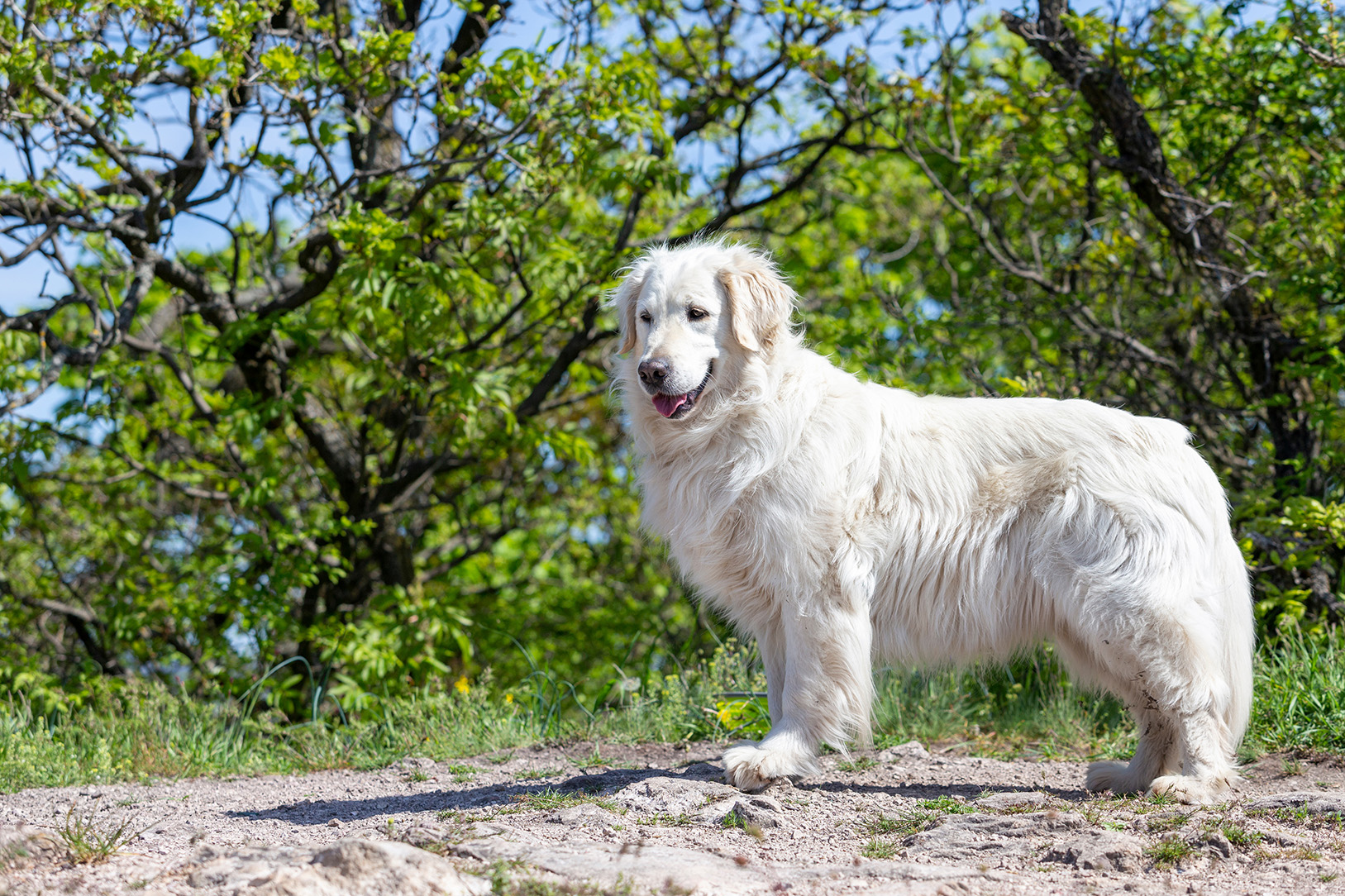
Description
The Kuvasz is a large and powerful breed of dog that originated in Hungary, where it has been used for centuries as a livestock guardian. Its primary role was to protect flocks of sheep and cattle from predators such as wolves and bears, and its natural protective instincts and loyalty to its family make it an excellent guardian even today. Historically, the Kuvasz was highly valued by Hungarian nobility, often seen as a symbol of strength and courage, and it was considered one of the finest breeds for protecting livestock in rugged terrains.
Physically, the Kuvasz is an imposing dog, standing between 26 to 30 inches tall at the shoulder and weighing between 70 to 115 pounds, with males typically being larger. The breed is known for its strong, muscular build, with a broad chest, sturdy legs, and a deep, powerful bark that is used to deter potential threats. Its dense, white coat is one of its most striking features, consisting of a thick undercoat and a longer outer coat that serves to protect the dog in harsh weather conditions. The white coat also reflects its historical purpose of distinguishing it from predators in the wild. Despite its size and imposing presence, the Kuvasz is agile and quick, able to move efficiently across various terrains to protect its flock.
The Kuvasz is intelligent, independent, and fearless, with a natural instinct to protect its territory and those it cares for. While it can be aloof and reserved with strangers, it is deeply loyal and affectionate with its family members. Early socialization and training are crucial to ensuring that the Kuvasz is well-behaved, as its independent nature can make it challenging to train without a firm and consistent approach. This breed requires an experienced owner who can provide both mental stimulation and physical exercise to keep it happy and well-adjusted. Although the Kuvasz is a loving and devoted companion to its family, it is not typically suited for first-time dog owners or those looking for a passive, easygoing pet.
As a livestock guardian, the Kuvasz thrives when given a job to do, whether that’s guarding animals or protecting property. While it can adapt to family life, it requires plenty of space to roam and engage in its protective behaviors. In addition to its guarding role, the Kuvasz can also excel in dog sports, obedience, and even as a therapy dog in the right environment. However, its need for space and exercise means that apartment living is not ideal for this breed.
In summary, the Kuvasz is a powerful and loyal breed, highly regarded for its protective instincts and independence. It is best suited to active families or individuals with experience in handling large, strong-willed dogs. With proper training and socialization, the Kuvasz makes a devoted and capable companion, whether as a working dog or a guardian for the home.
History
The Kuvasz is an ancient and noble breed with origins that trace back thousands of years to Central Asia, where its ancestors were used as livestock guardians by nomadic tribes. The breed’s name likely derives from the Turkish word *kavas*, meaning “armed guard” or “protector,” reflecting its historical role. The Kuvasz was brought to Hungary by the Magyars during their migration to the Carpathian Basin in the 9th century. Once in Hungary, the breed became highly valued for its ability to protect flocks from predators such as wolves and bears, as well as for its loyalty and courage.
During the Middle Ages, the Kuvasz’s role expanded beyond guarding livestock. Hungarian nobility prized the breed for its imposing size, strength, and intelligence, making it both a protector and a symbol of status. King Matthias Corvinus of Hungary, who reigned in the 15th century, was particularly fond of the Kuvasz and reportedly kept them as personal bodyguards. He also gifted Kuvaszok to visiting dignitaries, spreading their reputation beyond Hungary’s borders.
The Kuvasz faced challenges in the 20th century, particularly during World War II, when their population suffered greatly. The breed was targeted by soldiers due to its protective nature, as Kuvaszok would fiercely defend their families and properties. By the war's end, the breed was near extinction, but dedicated breeders in Hungary and other countries worked tirelessly to restore its numbers and preserve its traditional traits.
Today, the Kuvasz is cherished as both a working dog and a family companion. While it retains its natural guarding instincts, it is also known for its gentle and affectionate demeanor with those it knows and trusts. The breed’s rich history as a protector and symbol of loyalty reflects its enduring appeal and its deep connection to Hungary’s cultural heritage.
Kuvasz Hunting Ability and Traditional Roles
Appearance
A Kuvasz is a substantial, well-balanced white dog with a thick double coat designed for outdoor work. The outline is athletic and sturdy—built for long hours of patrolling and covering rough ground rather than for extreme bulk.
Breed standards typically call for white (ivory can occur), dark pigment around the eyes and nose, and a coat that may be wavy or straight with a dense undercoat. Adults are imposing in size, with males commonly larger than females.
Colors
• White
Health
As a large, athletic breed, the Kuvasz can be affected by orthopedic concerns such as hip dysplasia, so responsible breeding and maintaining a lean body condition matter. Like other deep-chested dogs, they may also be at risk for bloat (gastric dilatation-volvulus), which is a true emergency.
Good owners plan proactive veterinary care: age-appropriate exercise while growing, joint-friendly conditioning as adults, and prompt evaluation of limping, eye irritation, or persistent skin/ear issues that can be harder to notice under a heavy coat.
Care
The Kuvasz coat is not corded, but it is dense and sheds—often heavily during seasonal coat changes. Regular brushing helps prevent mats, removes dead undercoat, and keeps the dog more comfortable, especially around the neck, behind the ears, and the “pants” on the hindquarters.
Basic care also includes routine ear checks, nail trims, and frequent skin/parasite checks (a thick white coat can hide problems). Outdoor-working dogs in wet climates may need extra attention to keep the coat and skin from staying damp for too long.
Training
Training a Kuvasz is less about drilling obedience and more about building cooperation and reliable household manners. Short, consistent sessions, calm confidence, and rewards that motivate the dog generally work better than repetition or force.
Start early with socialization, leash skills, and a solid “place/settle” routine. Given the breed’s size and protective instincts, it’s especially important to teach polite greeting behavior, impulse control at doors/fences, and a dependable response to being called away from something the dog is watching.
Temperament
Kuvaszok are often described as “one-family” dogs: deeply loyal and protective with their own people, and naturally discriminating about strangers. Many are calm in everyday life, but they can switch quickly into guard mode if they think something is off.
Because the breed was selected to act on initiative, a Kuvasz may test limits and is unlikely to respond well to harsh or chaotic handling. They tend to do best with steady leadership, thoughtful exposure to new situations, and clear rules about who and what is allowed on the property.
Lifestyle
Most Kuvaszok are happiest with space, a predictable home base, and a job-like role—usually “watching the property.” They commonly need a securely fenced yard and careful visitor management, and they may not be ideal for apartment living or neighborhoods where frequent foot traffic triggers guarding and alert barking.
They can be wonderful family companions in the right setting, but they’re rarely a low-effort breed. Expect daily exercise, mental engagement, and ongoing reinforcement of boundaries so the dog’s natural protectiveness stays appropriate.
Ownership
A Kuvasz is best matched with owners who want a serious guardian and are ready to lead an independent working dog. That means committing to early socialization, consistent training, and management tools like secure fencing, controlled introductions, and clear household rules.
When choosing a puppy, look for breeders who prioritize stable temperament and health testing, and take time to meet adult Kuvaszok to understand what “guardian temperament” feels like in real life. In the right hands, the breed can be profoundly loyal; in the wrong setup, it can become difficult to manage.
Interesting Facts
- Country of origin: Hungary; historically used as a livestock guardian and estate protector.
- Coat/color: thick double coat; white is the accepted color (ivory can occur in some standards).
- Temperament theme: devoted to its family, naturally suspicious/discriminating with strangers.
- Working style: intelligent and independent; comfortable making decisions when “on duty.”
- Size (typical standard ranges): males often around 28–30 inches at the withers; females around 26–28 inches.
- Common owner priorities: early socialization, secure fencing, and clear boundaries to channel guarding instincts.