
Guard Dog
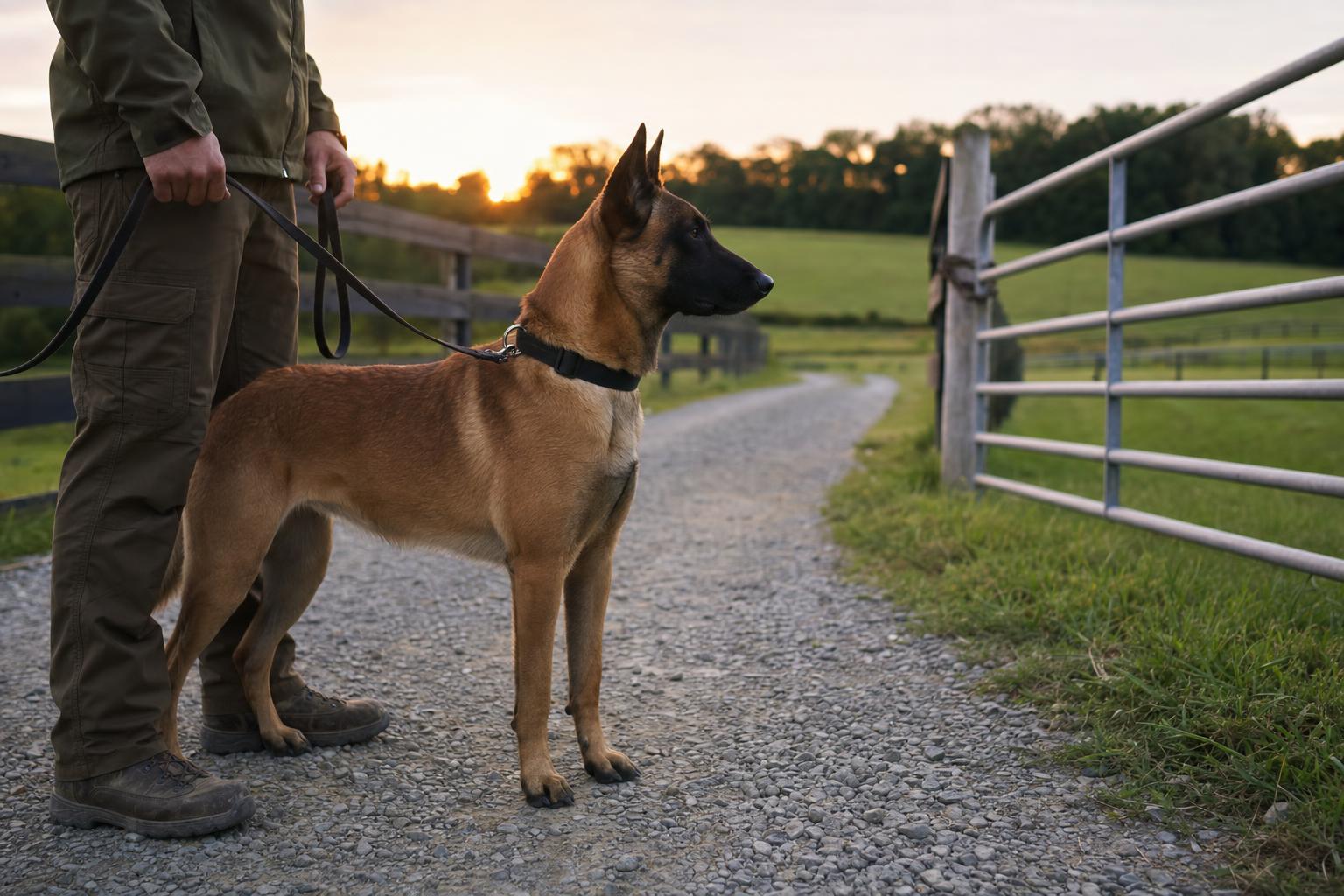
A guard dog is trained to deter unwanted access and to alert the handler to unusual activity around a home, property, vehicle, or person. That deterrence can be as simple as presence and bark, or it can include more advanced controlled engagement work—but the common theme is that the dog’s behavior is purposeful, predictable, and under handler control. The goal is not a nervous dog that reacts to everything. The goal is a stable dog that is calm in normal situations and clearly communicates when something is off. When people say they want protection, what they usually want is time: time to notice, time to respond, time to make decisions. A well-trained guard dog helps create that time.
Good guard work begins with temperament and boundaries. The dog must be comfortable with normal visitors, neutral in public, and able to settle. The dog also needs a clear understanding of “this is ours” versus “this is everywhere.” That’s why trainers spend so much time on obedience, place work, recalls, and impulse control. The dog learns to focus on the handler, to wait at thresholds, to ignore passing distractions, and to disengage when told. Then you add alert behaviors: a bark on cue, a watch behavior, a controlled posture at a boundary line. Many programs teach a structured routine—hear something, alert, look to handler, hold position—so the dog isn’t freelancing. The handler learns to reinforce calm, confident posture rather than frantic escalation.
If a program includes contact work, the standards get even higher. The dog must have a reliable out, a reliable recall, and a stable grip trained in a controlled context with an experienced helper. The dog must not be taught to bite indiscriminately, and it must not be trained in a way that creates fear-based aggression. Responsible trainers also build environmental proofing: night work, loud sounds, slippery floors, stairs, vehicles, and the presence of neutral strangers. A dog that can only “work” in one familiar field isn’t prepared for real life. Just as important, the handler must practice management: leash skills, muzzling when appropriate, legal awareness, and routines that prevent accidental incidents.
A good guard dog is, in many ways, a dog with excellent manners and clear rules. The dog’s confidence is steady, not brittle. The dog understands what earns reward: staying calm, watching boundaries, alerting appropriately, and responding instantly to the handler’s cues. That kind of dog can be a real asset—one that discourages problems before they start—while still being safe to live with, safe around family, and predictable in public. When the training is ethical and the dog is suited for the role, the result feels less like having a weapon and more like having a well-trained teammate who takes the job seriously without making everything a crisis.
- Akbash
- Akita
- Anatolian Shepherd Dog
- Beauceron
- Belgian Malinois
- Black Russian Terrier
- Bouvier des Flandres
- Boxer
- Bullmastiff
- Cane Corso
- Doberman Pinscher
- Dogue de Bordeaux
- German Pinscher
- German Shepherd
- Giant Schnauzer
- Great Dane
- Great Pyrenees
- Komondor
- Kuvasz
- Mastiff
- Neapolitan Mastiff
- Rottweiler
- Russian Black Terrier
- Standard Schnauzer
- Tibetan Mastiff