
Nova Scotia Duck-Tolling Retriever
The Nova Scotia Duck-Tolling Retriever (often called the “Toller”) is a compact, athletic retriever developed in Nova Scotia to lure ("toll") waterfowl within range and then retrieve birds from land and icy water. It’s the smallest of the retriever breeds, but it’s built for serious work: quick, agile, and enthusiastic when there’s a job to do.
In a home setting, Tollers tend to thrive with people who enjoy training and daily activity. They’re smart, people-oriented dogs that often form strong bonds with their family and do best when they have both mental challenges and vigorous exercise as part of the routine.
Description
The Nova Scotia Duck-Tolling Retriever, often referred to as the Toller, is a highly energetic and intelligent breed known for its remarkable skill in retrieving waterfowl. Originating in Canada, specifically in the province of Nova Scotia, this breed was developed for hunting, particularly for tolling, which is a technique used to lure ducks within shooting range by attracting them with the dog’s playful movements on the shore. The Toller’s ability to work tirelessly in water and its natural retrieving instinct make it an excellent choice for hunters, but it also makes a great companion for active families or individuals who can meet its exercise needs.
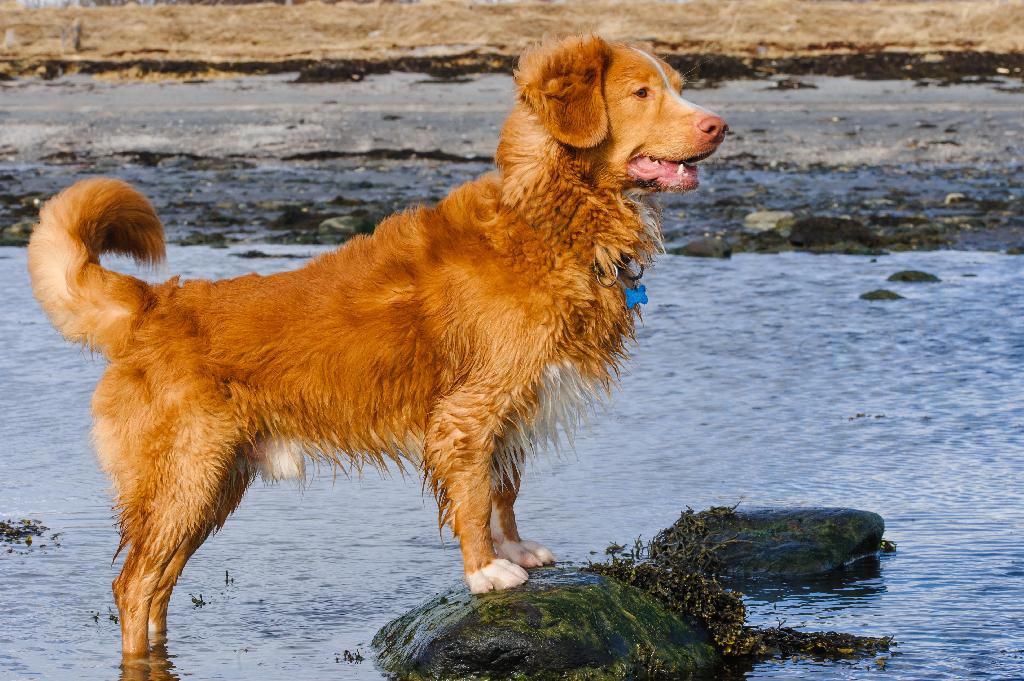
Physically, the Nova Scotia Duck-Tolling Retriever is a medium-sized dog, with males standing between 18 to 21 inches tall at the shoulder and weighing between 35 to 50 pounds. It has a well-proportioned, athletic build designed for speed and agility, making it an excellent swimmer and runner. The breed has a dense, water-resistant double coat that helps protect it from cold water, with a striking red or orange color that is often accented by white markings on the chest, feet, and tail tip. Its expressive face, with dark eyes and an alert expression, gives the Toller an eager, intelligent look that reflects its energetic and work-focused personality.
The Nova Scotia Duck-Tolling Retriever is known for its intelligence and enthusiasm. Highly trainable and eager to please, this breed excels in obedience and agility training, as well as in more specialized tasks like retrieving in waterfowl hunting. The Toller is a natural retriever, born with an instinct to fetch and return objects, and it loves to work in both water and on land. Its energy and drive, combined with its keen sense of smell, make it an outstanding hunting partner. However, because of its high intelligence and energy, the Toller needs ample mental and physical stimulation to stay happy and avoid boredom. Without proper outlets for its energy, it can become destructive or overly hyperactive.
In addition to its skills as a hunter, the Nova Scotia Duck-Tolling Retriever is known for being affectionate and social, forming strong bonds with its family. It tends to be good with children and gets along well with other dogs, although early socialization is key to ensuring positive interactions with new people and pets. While the Toller is generally friendly and approachable, its protective instincts make it a good watchdog. It is often reserved around strangers but warms up once it feels comfortable. This breed is also highly active and enjoys activities like running, hiking, and swimming, making it an ideal companion for individuals or families who enjoy outdoor adventures.
Overall, the Nova Scotia Duck-Tolling Retriever is a versatile, energetic, and affectionate breed that excels in both working environments and as a family pet. Its natural retrieving abilities, combined with its intelligence and trainability, make it a fantastic choice for hunters, while its friendly and loyal nature makes it an excellent companion for those who can provide it with the exercise, mental challenges, and affection it needs. Whether out in the field or lounging at home, the Toller is a devoted and enthusiastic partner.
History
The Nova Scotia Duck Tolling Retriever, often referred to simply as the "Toller," is a Canadian breed with a fascinating history rooted in the hunting traditions of Nova Scotia. Developed in the early 19th century, the Toller was created to lure ducks and other waterfowl into shooting range, a technique known as "tolling." The breed’s name reflects this unique role, as "tolling" refers to the way these dogs play along the shoreline, attracting the curiosity of waterfowl, which are then drawn closer to hunters.
The Toller’s development likely involved a mix of several breeds, including spaniels, retrievers, setters, and possibly farm collies and even the spitz-type dogs brought by early settlers. Breeders in the Little River district of Yarmouth County, Nova Scotia, worked to create a small, agile, and highly trainable dog with the energy and playfulness needed for tolling. The breed was originally called the Little River Duck Dog but was later renamed the Nova Scotia Duck Tolling Retriever to honor its place of origin.
Despite its effectiveness as a hunting dog, the Toller remained relatively obscure outside of Nova Scotia for much of its history. It wasn’t until the 20th century that the breed began to gain broader recognition. In 1945, the Canadian Kennel Club officially recognized the Toller, and its popularity started to grow. The breed was introduced to other countries, including the United States and Europe, where its intelligence, versatility, and friendly temperament made it a favorite among hunters and families alike. The American Kennel Club recognized the Toller in 2003.
Today, the Nova Scotia Duck Tolling Retriever is celebrated for its high energy, intelligence, and loyalty. While it continues to excel in its original role as a waterfowl retriever, it has also become a popular choice for canine sports and as a family companion. The Toller’s history reflects its unique heritage and the dedication of those who preserved its remarkable tolling abilities and charming personality.
Nova Scotia Duck-Tolling Retriever Hunting Ability and Traditional Roles
Appearance
Tollers are medium-sized, powerful, and balanced, with a slightly longer-than-tall outline and a well-muscled, compact build. Their expression can look a bit “serious” at rest, but they typically light up when asked to work, especially for retrieving games.
The breed has a water-repellent double coat designed for cold conditions, usually in shades of red to orange with lighter feathering and often some white markings (commonly on the blaze, chest, feet, and tail tip). Webbed feet, moderate feathering, and a well-feathered tail reflect their history as strong swimmers and working retrievers.
Colors
• Buff
• Copper
• Dark Red
• Golden Red
• Light Red
• Red
• Red Gold
Health
Like all breeds, Tollers can be affected by inherited and acquired health problems, so choosing breeders who use orthopedic and eye screening—and who can discuss health history in their lines—matters. Breed-club guidance commonly emphasizes evaluations such as hips and eyes, with additional exams or testing considered depending on the dog and breeding plan.
For Tollers, genetic tools may include DNA tests for several breed-relevant conditions, alongside broader screening programs (for example, CHIC participation and documented results). For owners, the practical takeaway is to prioritize preventative care, keep your dog lean and fit, and ask your veterinarian which screenings make sense for your individual dog’s age and lifestyle.
Care
Plan on regular coat maintenance, especially during seasonal shedding. The double coat generally benefits from thorough brushing to remove dead undercoat and prevent mats in feathered areas; most Tollers don’t need frequent full baths unless they’re living the classic retriever life (mud, ponds, and field days).
Because they’re built to work, care is also about management: keep nails trimmed for traction, check ears after swimming, and build a daily habit of exercise. A bored Toller can quickly invent their own entertainment, so providing outlets for retrieving, scent games, and training sessions is part of good “care,” not an optional extra.
Training
Tollers are typically quick learners with strong retrieve/play motivation, which makes reward-based training especially effective. Short, upbeat sessions with clear criteria tend to get the best results; they’re often at their best when training feels like a game with a purpose.
Their intensity can be a double-edged sword, so it helps to teach “off switches” early: settle on a mat, calm leash walking, and impulse-control skills around thrown toys. Incorporating structured retrieving, obedience/rally, agility, dock diving, or field-style drills can channel that drive into polite, reliable behavior.
Temperament
A good Toller is bright, alert, and ready for action—outgoing without being frantic. They’re commonly affectionate with their people, eager to participate, and happiest when included as a true “do-things-with-you” companion rather than a backyard dog.
Many Tollers are reserved with strangers at first, which can look like watchfulness or caution in new situations; that’s different from fearfulness. They often do best with early social exposure and consistent routines, and they typically shine when their natural retrieving drive is channeled into structured play, sport, or field work.
Lifestyle
This is a high-energy, high-engagement retriever. Most Tollers do best in homes where they can get daily aerobic exercise plus brain work—think training, retrieving games, hiking, and dog sports—rather than a quick walk and done.
They’re often well-suited to active families, outdoor-oriented individuals, and people who enjoy structured hobbies with their dog. They can live in many environments (including suburban homes) if their exercise needs are met, but they’re generally a poor match for a sedentary schedule or long stretches of isolation.
Ownership
Owning a Toller is easiest when you want a partner, not a decorative pet. Expect to invest time in training, social exposure, and daily activity; in return you often get a highly responsive, fun, and capable dog that loves having a job.
Before committing, it’s worth meeting adult Tollers and talking with breed-club members or reputable breeders about typical energy level, sensitivity, and the realities of living with a driven retriever. A good plan includes puppy-proofing, a training class budget, and an agreement in the household about exercise responsibilities—because this breed will notice if you skip “their” routine.
Interesting Facts
- Purpose: developed to “toll” (lure) ducks with playful shoreline movement, then retrieve birds from water and land.
- Size: the smallest of the retrievers; compact, athletic, and built for agility.
- Coat: water-repellent double coat; shades of red/orange, often with some white markings.
- Work style: intense retrieving desire and love of water; many show a dramatic “on switch” when it’s time to work.
- Breed community: owners often participate in field work, obedience/rally, agility, dock diving, and other performance sports.