
English Pointer
The English Pointer (often called simply the “Pointer”) was developed as a fast, stylish bird dog whose job is to locate game by scent and then freeze in a classic “point” to show the handler where birds are hiding.
Bred for stamina and speed across open country, it’s an athletic companion that thrives with active people. When its exercise and mental needs are met, the Pointer is typically an affectionate, easygoing housemate.
Description
The English Pointer, often referred to simply as the Pointer, is a highly energetic and versatile gun dog breed originally developed in England for pointing and retrieving game. Known for its keen sense of smell, agility, and stamina, the Pointer excels in hunting and field trials, particularly for upland game birds.
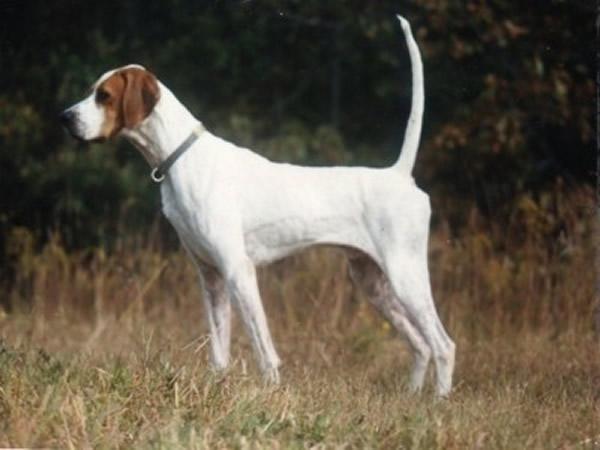
Physically, the English Pointer is a medium to large-sized dog with a sleek, athletic build. It typically stands between 25 to 28 inches tall at the shoulder and weighs between 45 to 75 pounds. The breed has a short, smooth coat that can come in a variety of colors, including lemon (pale yellow), liver, black, or orange, often with white or ticking patterns. Its long legs, deep chest, and strong frame make it an efficient runner, while its pointed muzzle and alert expression reflect its focused nature when working.
Temperamentally, the English Pointer is intelligent, enthusiastic, and eager to please, which makes it highly trainable, though it can be independent at times. The breed is generally friendly and affectionate with its family, but due to its strong prey drive and instinct to hunt, it may not always be reliable off-leash unless well-trained and properly socialized. It is not typically aggressive and tends to be gentle with children and other pets, especially when raised with them.
As a working dog, the English Pointer is known for its exceptional scenting ability, which allows it to locate game birds from a distance. It is also highly energetic, requiring ample physical exercise to stay healthy and happy. Pointers thrive in active environments and enjoy running, hiking, and engaging in other forms of exercise.
Overall, the English Pointer is an intelligent, hardworking, and loyal breed that excels in hunting, particularly for upland birds. It makes an excellent companion for active individuals or families who can provide the physical exercise, mental stimulation, and training it needs to be a well-rounded pet and working dog.
History
The English Pointer, often simply called the Pointer, is one of the oldest pointing breeds, with historical records indicating its development in England by the 17th century. Its lineage likely includes various Spanish, Portuguese, and French pointing dogs that were brought to Britain and crossed with local hounds and possibly Greyhounds. Early breeders aimed to create a dog that could find and point game birds, such as partridge and grouse, at considerable distances. This led to the refinement of a sleek, athletic dog possessing an intense pointing stance—a hallmark of the breed. By the early 18th century, Pointers had already begun to replace or supplement older methods of bird-hunting involving nets and hawks, proving more efficient for the evolving sport of shooting game birds over a pointing dog.
During the 19th century, the Pointer’s fame and popularity soared, thanks in part to the rise of formal field trials and organized hunts in Britain. Breeders focused on producing a dog with a powerful yet graceful conformation, coupled with a keen nose and an unwavering pointing instinct. The breed’s distinctive silhouette—long head, muscular frame, and tapered tail held straight—emerged as a standard by the mid-1800s. Pointers from leading kennels like the Duke of Kingston’s estate set the foundation for the modern breed, with many lines subsequently exported to the United States and other countries.
In America, Pointers quickly gained a reputation for excellence in field trials, where their remarkable speed and style dazzled spectators. By the late 19th century, the American Kennel Club (AKC) recognized the breed, and Pointers continued to dominate many field trial events. Despite evolving primarily as a sporting dog, the Pointer also earned admirers in the show ring, admired for its elegance and striking coat patterns. Today, the English Pointer remains a favorite among bird hunters and field trial enthusiasts worldwide. Its effortless pointing ability, high energy, and eagerness to work still reflect centuries of careful breeding dedicated to one purpose: finding game and “freezing” to signal the quarry’s location.
English Pointer Hunting Ability and Traditional Roles
Appearance
Pointers are medium-to-large, symmetrical sporting dogs built for endurance and ground-covering movement—clean lines, strong bone, and a “curved” outline that reads as both power and grace.
The head is a hallmark: long and chiseled with a defined stop and a slightly concave (“dish-faced”) muzzle. Ears are thin, set fairly high, and hang close to the head; the tail is medium length, thick at the root and tapering, carried level and lashing side to side in motion.
The coat is fine, short, and sleek with a sheen. Common color patterns include lemon & white, orange & white, liver & white, and black & white, with some self colors and tricolors permitted in certain standards. Typical height is about 25–27 in (63–69 cm) for males and 24–26 in (61–66 cm) for females.
Colors
• Black
• Black & White
• Lemon
• Lemon & White
• Liver
• Liver & White
• Orange
• Orange & White
• White
Health
English Pointers are generally robust, athletic dogs, but responsible breeding still matters. Ask breeders about health screening and what issues they see in their lines, and keep up with regular veterinary exams.
Because they’re built for speed and long miles, joint soundness and conditioning are important; hip evaluation is commonly recommended in many sporting breeds, and good muscle tone helps protect the body during hard play.
As with many deep-chested, active dogs, it’s wise to discuss bloat (gastric dilatation-volvulus) risk-reduction habits with your veterinarian—such as meal management and avoiding intense exercise immediately around feeding times.
Care
Coat care is straightforward: a quick brush or grooming mitt once or twice a week usually keeps shedding under control and the coat glossy. Regular nail trims, dental care, and ear checks (especially for active dogs) round out routine maintenance.
Exercise is the big requirement. Plan on daily, vigorous activity—long walks, runs, hikes, field time, or structured play—plus some brain work (scent games, obedience drills, retrieving/pointing-style activities).
A secure fence is important for many individuals, as a Pointer following scent can cover ground quickly. Balanced nutrition and keeping the dog lean help support joints and overall athletic conditioning.
Training
Pointers tend to learn quickly and usually respond best to calm, consistent, reward-based training. Start early with socialization, gentle handling, and simple skills that build focus.
Recall, leash manners, and “check-in” behaviors matter because the breed’s hunting drive can pull attention away in stimulating environments. Short sessions that end on success work better than repetitive drilling.
Channeling instincts is often the easiest path: field training, scentwork, tracking-style games, and active dog sports give the Pointer a job and reduce nuisance behaviors at home.
Temperament
The breed is best known for being alert, kind, and even-tempered, with a purposeful “always ready” attitude outdoors. Many Pointers are friendly and people-oriented, though some can be a bit reserved with strangers at first.
Because they were bred to hunt, they often have strong instincts to range, scent, and chase. They generally do well in family settings that provide structure, outlets for energy, and thoughtful introductions to other pets.
Lifestyle
This is a high-energy, outdoorsy breed. Pointers fit best with people who genuinely enjoy daily activity—runners, hikers, hunters, or families with time for structured exercise.
They often do best with space to move and opportunities to run safely (fenced areas or controlled off-leash settings). Without enough activity and engagement, boredom can show up as restlessness or destructiveness.
After a solid workout, many Pointers settle nicely and enjoy being close to their people. They’re typically happiest when included in the household routine rather than left alone for long stretches.
Ownership
A Pointer is a great match if you want an athletic partner and can commit to daily exercise, training, and enrichment. If you prefer a low-activity dog, the breed’s drive and stamina can feel like “too much dog.”
Choose sources carefully: look for breeders who emphasize temperament, functional structure, and health testing, and who can talk honestly about energy level and prey drive. Meeting adult dogs from the line can be very informative.
Plan for management basics—secure fencing, consistent recall training, and thoughtful pet introductions. With the right structure, the Pointer’s intensity in the field becomes a calm, affectionate steadiness at home.
Interesting Facts
- The breed’s name is literal: a Pointer’s job is to locate game birds by scent and “point” by freezing in a rigid stance.
- The Kennel Club (UK) describes the Pointer as “aristocratic,” symmetrical, and built for endurance and speed.
- Typical height: males about 63–69 cm (25–27 in); females about 61–66 cm (24–26 in).
- A slightly concave, “dish-faced” muzzle is a classic breed hallmark.
- The coat is short, fine, and sleek; common colors include lemon/orange/liver/black with white.
- Often nicknamed for its tapered “bee-sting” tail in some breed descriptions.