
Large Munsterlander
The Large Munsterlander is a versatile German gundog developed to hunt, point, and retrieve on land and in water. Bred for all‑day work in the field, this is an athletic, people-oriented dog that typically does best with an active handler who enjoys training and outdoor time.
They mature into steady working partners with a strong desire to use their nose and carry things in their mouth. While they can be affectionate family companions, they are not a “low-effort” pet; most individuals need daily structured exercise plus meaningful jobs (training, retrieving, tracking, or sport work).
Because they are a relatively uncommon breed in many areas, availability and support networks may be limited. Prospective owners usually do best when they connect early with breed clubs and performance communities to find health-tested lines and realistic expectations.
Description
The Large Munsterlander is an elegant and versatile gundog breed that originates from Germany. Known for its intelligence, keen hunting instincts, and friendly nature, the breed is highly regarded for its abilities in both upland game bird hunting and waterfowl retrieval. The Large Munsterlander was developed in the 19th century by crossing various pointing breeds, with a particular emphasis on creating a dog that could excel in both pointing and retrieving tasks. It has since gained popularity not only in its native Germany but also in other parts of Europe and North America as a working and family companion.
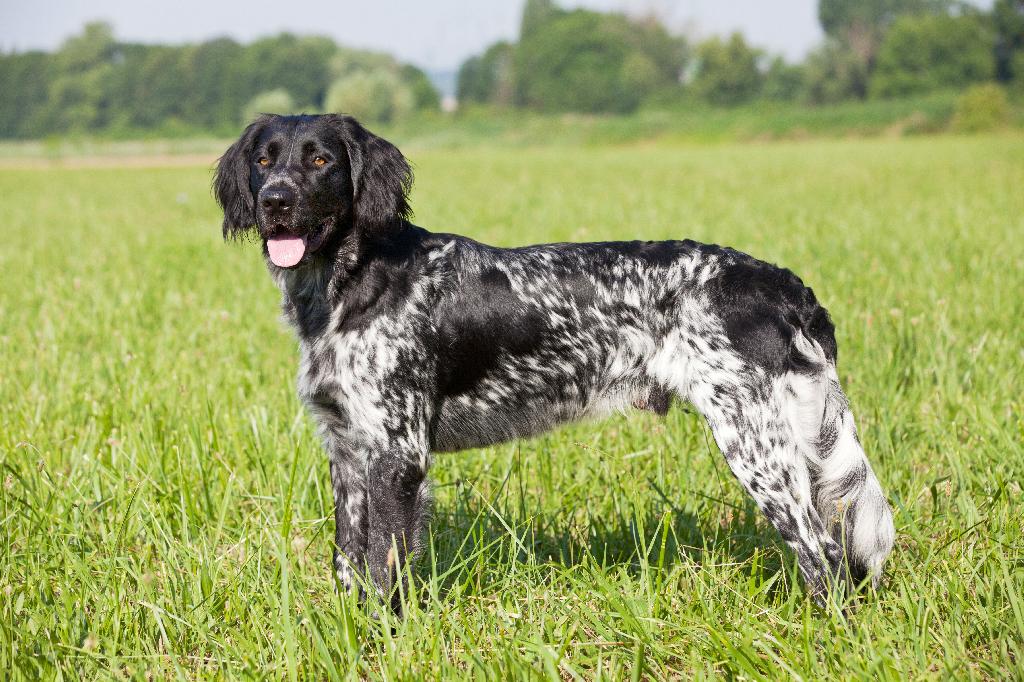
Physically, the Large Munsterlander is a striking dog with a graceful yet robust build. Males typically stand between 25 to 27 inches at the shoulder, while females are slightly smaller. The breed has a distinctive long, silky coat that is predominantly white with black or brown markings, often with speckling or patches on the body and face. Their large, expressive eyes and long ears add to their appealing appearance. The Munsterlander’s well-balanced body and muscular build enable it to cover large areas of terrain quickly and efficiently, whether it is pointing out game or retrieving in water.
Temperamentally, the Large Munsterlander is known for being affectionate, loyal, and good-natured, making it an excellent companion for families and individuals alike. They are highly intelligent and eager to please, which makes them relatively easy to train, though they do require consistent leadership and mental stimulation. As a breed developed for hunting, they retain a strong prey drive and enjoy being active, so they thrive in households with an active lifestyle. Their love of outdoor activities such as hiking, swimming, and running makes them a great match for those who enjoy spending time outside.
The Large Munsterlander’s versatility in the field is one of its most impressive qualities. It excels as a pointing dog, capable of detecting the scent of game from a distance, and it is also highly skilled in retrieving both on land and in water. Its strong swimming ability and passion for waterfowl hunting make it particularly suited for retrieving waterfowl in wetlands or lakes. While it is a talented working dog, the Large Munsterlander is also known for being gentle and patient with children, making it a good family pet. However, due to its high energy levels, the breed requires regular exercise and mental challenges to remain happy and healthy.
In summary, the Large Munsterlander is a highly capable and loyal dog with a strong work ethic, excellent hunting abilities, and a gentle temperament. Whether serving as a hunting companion or a family pet, this breed’s intelligence and versatility make it a standout choice for active individuals or households. Its loving nature and striking appearance, combined with its remarkable skills in the field, have made the Large Munsterlander a cherished breed for dog enthusiasts around the world.
History
The Large Munsterlander is a versatile hunting breed that originated in the Münster region of Germany. Its history dates back to the 19th century when breeders sought to develop an all-purpose gun dog capable of pointing, retrieving, and tracking game on both land and water. While it shares ancestry with other German pointers, particularly the German Longhaired Pointer, the Large Munsterlander distinguished itself with its striking black-and-white coat and adaptable nature.
The breed's development was shaped by a combination of practicality and aesthetic preference. In the late 19th century, German breeders began to standardize hunting breeds, and dogs with liver-and-white coats were classified as German Longhaired Pointers. Black-and-white-coated dogs, despite being just as capable, were excluded from the registry. These black-and-white dogs were preserved by hunters and enthusiasts in the Münster region, who recognized their exceptional hunting abilities and loyal temperament. By the early 20th century, efforts to establish the Large Munsterlander as a distinct breed gained momentum, and the first breed club was founded in 1919.
The Large Munsterlander quickly gained recognition for its versatility in the field and its suitability as a family companion. Its intelligence, trainability, and willingness to work closely with its handler made it a favorite among hunters in Germany and beyond. The breed's population spread to other countries, including the United States and Canada, where it has gained a following among sportsmen who appreciate its skill and adaptability.
Today, the Large Munsterlander is celebrated for its dual role as a reliable hunting partner and a devoted family dog. While it remains less well-known than some other pointer breeds, its reputation as an intelligent, energetic, and versatile companion continues to grow. The breed's history reflects its resilience and the dedication of those who worked to preserve its unique qualities, ensuring its place as a valued member of the sporting dog community.
Large Munsterlander Hunting Ability and Traditional Roles
Appearance
Large Munsterlanders are balanced, medium-to-large sporting dogs with clean, elegant lines and a “noble” outline. They are built for endurance rather than heaviness: a deep chest, strong topline, and well-angulated shoulders and hindquarters that support a long, ground-covering trot.
The hallmark is a black-and-white coat (often with patches, ticking, or roaning) and a solid black head that may have a blaze. The coat is long and dense on the body with noticeable feathering on the ears, tail, and the backs of the legs.
Expression is typically attentive and intelligent, with medium-sized dark eyes and high-set ears carried close to the head. Overall, the breed should look capable of working in rough cover and cold water while still moving freely and efficiently.
Colors
• Black
• Black / White
• Black & White
Health
Like many medium-to-large gundogs, orthopedic soundness is a major priority. Responsible breeders commonly screen hips and elbows, and owners should keep puppies lean and avoid repetitive high-impact exercise during growth to reduce joint stress.
Some populations also monitor specific inherited risks; in the UK, breeders may use DNA testing for hyperuricosuria (HUU) to help manage the condition in the breeding pool. Routine eye screening may also be recommended depending on local breed-club guidance.
Day-to-day, maintain good fitness rather than just “weight,” because these dogs are built to work for hours. Partner with your veterinarian on a preventive plan (parasite control, vaccination, dental care), and seek prompt evaluation for lameness, persistent ear issues, or exercise intolerance.
Care
Plan on regular grooming to keep the feathered coat comfortable and tangle-free. Weekly brushing is a good baseline, with more frequent attention after burrs, mud, or swimming; ears, tail feathering, and the backs of the legs are common trouble spots.
Because this is a working-coated breed, baths are usually occasional rather than constant, but rinsing after saltwater or algae-filled ponds is smart. Keep nails short for traction and sound movement, and check ear canals routinely—especially in dogs that swim or spend time in wet cover.
Daily exercise should include both aerobic activity (running, hiking, field work) and mental work (retrieving drills, scent games, obedience). A bored Large Munsterlander often invents their own entertainment, so proactive routines prevent many household issues.
Training
Large Munsterlanders are typically tractable, intelligent, and responsive to consistent handling. They often do best with reward-based training that channels their natural retrieving and hunting instincts—short, clear sessions with lots of success and movement.
Start early with name recognition, recall foundations, impulse control, and cooperative handling (ears, feet, mouth). Because they are bred to range and use their nose, “check-in” habits and reliable recall are non-negotiable for off-leash freedom.
For working or sport homes, build steadiness gradually: calm holds, delivery to hand, and controlled excitement around birds or dummies. Harsh corrections can create avoidance or confusion in sensitive individuals, so aim for calm clarity, plenty of reps, and thoughtful progression.
Temperament
Temperament should be lively and engaged without being nervy or hyperactive. Many Large Munsterlanders are keen to be with their people, thrive on routine, and bond closely with the household—especially when they get adequate exercise and training.
In the field they tend to be enthusiastic and persistent, with strong prey drive and a natural interest in birds and scent. That same drive can show up at home as a desire to chase squirrels or investigate every odor, so early boundaries and outlets matter.
With thoughtful socialization, they are usually polite with familiar dogs and visitors, but they’re not a breed that enjoys long stretches of boredom. Under-stimulated dogs can become noisy, mouthy, or “busy,” so enrichment and clear structure are key to a stable, pleasant companion.
Lifestyle
This breed fits best in an active household that enjoys training and outdoor recreation. A Large Munsterlander is usually happiest when they can run, retrieve, and explore safely every day, ideally with off-leash opportunities in secure areas.
They can live in a home environment, but they are not apartment-easy unless the owner is exceptionally committed to daily exercise and enrichment. A fenced yard helps, but it does not replace purposeful activity—many will simply patrol and look for something to do.
Because they are social and handler-focused, they typically do poorly when left alone for long workdays without support. If you travel, hunt, or compete, this is often a wonderful “do-everything” partner; if your routine is mostly sedentary, the mismatch shows quickly.
Ownership
Choose a breeder who proves temperament and working ability (field, hunt tests, or performance venues) and who can show verifiable health screening results. Ask how they raise puppies, what early socialization they do, and how they match pups to homes—drive levels can vary.
Expect to invest in training equipment, time, and access to safe exercise spaces. Many owners enjoy structured outlets like retrieving, tracking, agility, canicross, or organized field work; these activities make day-to-day life easier and strengthen reliability.
If you’re adopting an adult, prioritize a dog with a known off-switch in the house and a history of living successfully in a home setting. Ownership is very rewarding when the dog’s instincts are respected and given appropriate work, but frustrating when the breed is treated like a casual, low-activity pet.
Interesting Facts
- Originated in Germany as a versatile pointing and retrieving gundog.
- Distinctive black-and-white coat with feathering; solid black head is typical.
- Bred to work on land and in water; many individuals love swimming and retrieving.
- Usually needs daily exercise plus mental work to stay calm and well-mannered.
- Health-conscious breeding commonly includes hip and elbow screening; some regions also use DNA testing for HUU and routine eye testing.