
Scottish Deerhound
The Scottish Deerhound is a tall, rough-coated sighthound developed in Scotland for coursing red deer across the Highlands. Breed histories note that large greyhound-type hunting dogs have existed in Scotland for centuries, and that the Deerhound became especially associated with deer coursing before firearms changed the sport.
Today the Deerhound is best known as a gentle giant: athletic enough to enjoy running sports, but typically calm and dignified in the home. It’s a large breed with significant space and management needs, so it tends to suit owners who are prepared for giant-dog realities (size, food, transport, and shorter average lifespan).
Description
The Scottish Deerhound is a noble and elegant breed, known for its striking appearance, gentle nature, and impressive hunting skills. Originally bred in Scotland for hunting large game, particularly red deer, this breed has a long history that dates back to the 16th century. The Scottish Deerhound was highly valued by nobility for its ability to chase and bring down deer with speed and endurance, making it one of the most respected hunting breeds of its time. Today, while the Scottish Deerhound is less often used for hunting, it remains a cherished companion and show dog, prized for its grace and calm demeanor.
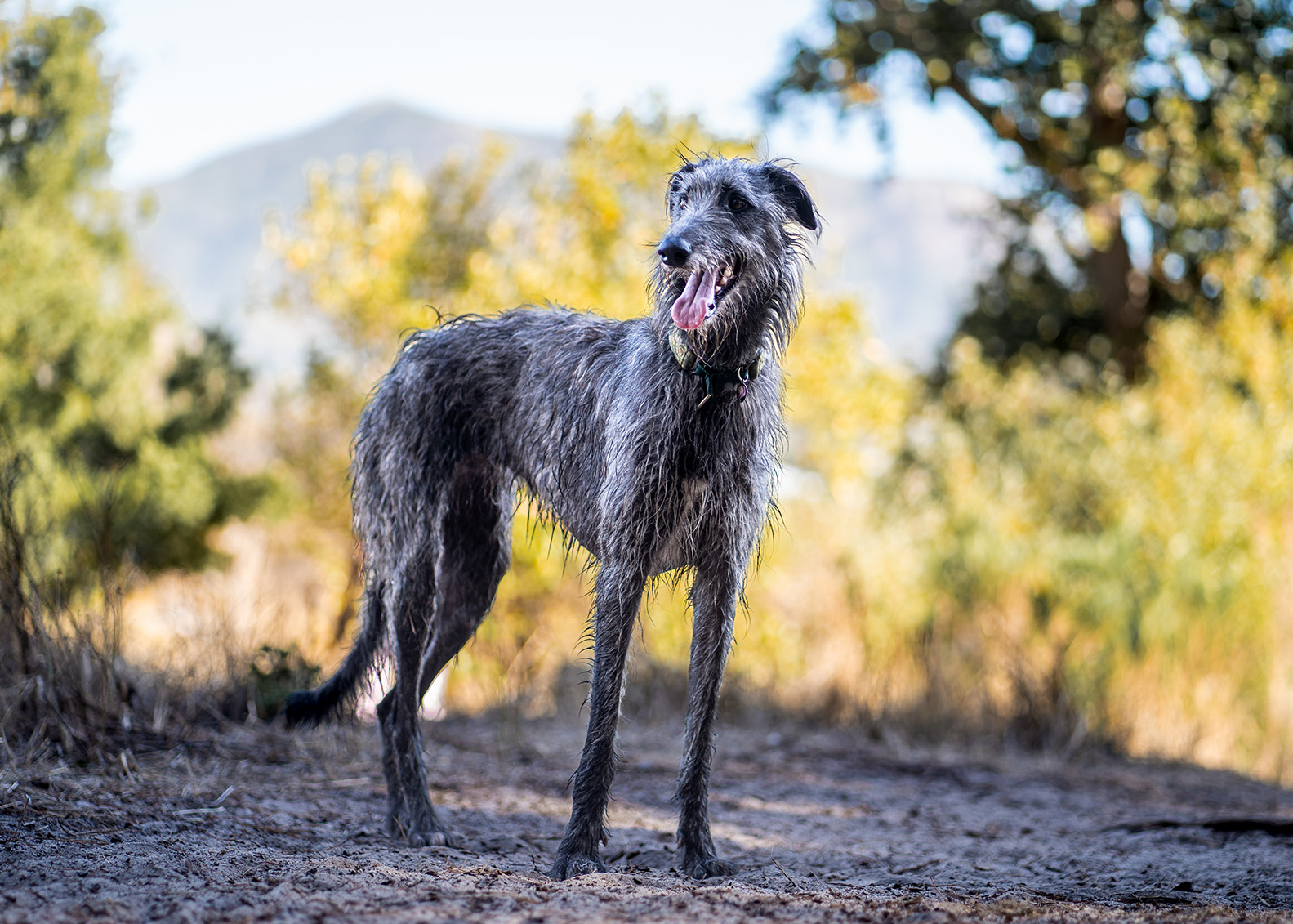
Physically, the Scottish Deerhound is a large and imposing dog, often compared to a greyhound in its build but with a more rugged, coarse coat. Standing between 28 and 32 inches at the shoulder and weighing between 75 and 110 pounds, it has a tall, slim yet muscular frame designed for speed and stamina. Its distinctive coat is rough and wiry, often described as being similar to that of a terrier, with a variety of colors including blue-gray, brindle, black, and fawn. The Scottish Deerhound’s head is long and narrow, with a refined, aristocratic appearance, and its deep-set eyes give it a soft, gentle expression. Its long, flowing tail and graceful movement add to its overall elegance, making it a striking figure in both the field and at shows.
Temperamentally, the Scottish Deerhound is known for its calm, dignified nature and its affectionate personality. Despite its large size, it is often described as gentle and even-tempered, particularly with its family. These dogs are friendly, social, and form strong bonds with their human companions, making them excellent family pets. Although they have a strong prey drive due to their hunting heritage, Scottish Deerhounds are typically good with other dogs and pets if properly socialized from a young age. They are not known to be overly aggressive or territorial but rather tend to be peaceful and reserved, making them wonderful companions in a home setting. However, due to their hunting background, they should always be kept on a leash or in a securely fenced area when outdoors, as they may give chase to small animals.
Scottish Deerhounds are also known for being relatively low-maintenance in terms of grooming, requiring only occasional brushing to maintain the integrity of their wiry coat. They do shed, but not as heavily as some other breeds. Due to their large size and history as a sighthound, they are prone to some health concerns, such as heart issues, bloat, and joint problems, so regular veterinary care is important. Overall, the Scottish Deerhound is a versatile, affectionate breed that excels as both a hunter and a companion, bringing grace and gentleness to any household fortunate enough to have one.
History
The Scottish Deerhound, often referred to as the "Royal Dog of Scotland," is one of the oldest and most distinguished breeds in the British Isles. Its history dates back to at least the Middle Ages, with roots that may extend to ancient Celtic times. Originally bred by Scottish clans, the Deerhound was developed as a hunting dog specifically for pursuing and taking down deer in the rugged Highlands. Its exceptional speed, strength, and endurance made it ideally suited for the challenging terrain and large game of the region.
The breed was highly valued by Scottish nobility, to the point that ownership was often restricted to the aristocracy. This exclusivity earned the Deerhound a reputation as a symbol of status and power. It is said that the breed was so revered that a Deerhound could not be purchased with money but could only be acquired as a gift from a noble. This close association with the Scottish aristocracy contributed to the breed’s decline during periods of social upheaval, such as the Highland Clearances in the 18th and 19th centuries, when traditional deer hunting practices diminished.
The Scottish Deerhound's fortunes improved in the 19th century, thanks to dedicated breeders who sought to revive and preserve the breed. Archibald and Duncan McNeill, two brothers with a passion for the breed, played a key role in its restoration. They established breeding programs that focused on maintaining the Deerhound's noble appearance and hunting capabilities. The breed gained recognition in dog shows and began to spread beyond Scotland, capturing the interest of enthusiasts in Britain and beyond.
Today, the Scottish Deerhound is cherished for its gentle and dignified temperament, as well as its historical significance. While it is no longer used for hunting deer, the breed remains a beloved companion and show dog. Its rich history as a noble and loyal hunting partner is a testament to its enduring appeal and the dedication of those who have worked to preserve this elegant and ancient breed.
Scottish Deerhound Hunting Ability and Traditional Roles
Appearance
The Deerhound resembles a rough-coated Greyhound of larger size and bone, combining height and reach with a lean, athletic outline. The Royal Kennel Club breed standard describes a deep chest, arched loin, long tail, and easy, active movement with a long stride.
Coat is shaggy and close-lying rather than fluffy, with a harsh, wiry texture over the body and softer hair on head, breast, and belly. Color is typically in the grey/brindle range; overall, the breed should look built for speed, power, and endurance rather than bulk.
Colors
• Black
• Black Brindle
• Blue
• Blue Gray
• Brindle
• Brown Brindle
• Fawn
• Gray
• Gray Brindle
• Grey Brindle
• Red
• Red Brindle
• Red Fawn
• Tan Brindle
• Yellow
• Yellow Brindle
Health
Like many deep-chested, giant sighthounds, Scottish Deerhounds have several important health risks owners should plan around. Veterinary breed resources commonly highlight bloat/GDV as an emergency concern, and they also note predispositions to dilated cardiomyopathy and osteosarcoma (bone cancer).
Work with breeders who share health history and screening practices, and establish a relationship with a veterinarian comfortable with giant-breed care. Practical prevention includes maintaining a lean physique, avoiding sudden spikes in intense exercise, and discussing bloat-risk strategies (including the pros/cons of prophylactic gastropexy) with your vet.
Care
Grooming is generally straightforward: the harsh coat benefits from weekly brushing and occasional baths, with extra attention to ears, nails, and teeth. Because they’re large and fast, keeping nails trimmed and pads in good condition matters for comfort and safe traction.
Exercise needs are real but often misunderstood—many Deerhounds are relaxed loungers between activity bursts. Daily walks plus regular access to a safely enclosed area for running suit them well. As with most giant breeds, controlled growth in puppyhood, lean body condition, and sensible conditioning help protect joints and soft tissues.
Training
Training tends to work best as a cooperative partnership rather than strict drilling. Deerhounds can learn quickly, but they may bore with repetitive sessions; short, positive reinforcement-based training and variety are key.
Because chasing is a natural instinct, recall is most reliable when paired with management tools: secure fencing, leash skills, and long lines for staged practice. Activities like lure coursing and other sighthound sports can provide an outlet that supports both training and mental well-being.
Temperament
Deerhounds are widely valued for a gentle, friendly nature and a quiet, dignified presence. Breed standards emphasize a docile, good-tempered dog that is not suspicious, aggressive, or nervous, and many owners find them affectionate without being “pushy.”
Like other sighthounds, they can have a strong prey drive, especially outdoors, and they may be independent thinkers. Early socialization and calm, consistent handling help them grow into steady adults who are polite with people and manageable around other animals.
Lifestyle
A Deerhound typically fits best in a home with space—both for day-to-day living and for safe, controlled running. They’re often calm indoors, but they do need meaningful daily exercise and occasional opportunities to stretch out at speed.
They are rarely ideal “off-leash everywhere” dogs; prey drive and sheer speed mean that unfenced areas can be risky. Families should also be ready for the logistics of a giant dog (large beds, bigger vehicles, higher food costs, and careful management around small children simply due to size).
Ownership
Choosing a Scottish Deerhound is as much about lifestyle as it is about liking the breed’s look. Seek breeders or rescues who prioritize stable temperament and who are transparent about health, longevity, and the realities of living with a giant sighthound.
Plan ahead for containment, training, and health costs, and make sure you have a safe place for regular running. If you want a quiet, gentle companion that can still thrill you with athletic speed, and you’re comfortable with big-dog management, the Deerhound can be an exceptional match.
Interesting Facts
• The Royal Kennel Club describes the Deerhound as resembling a rough-coated Greyhound of larger size and bone.
• Historically developed in Scotland as a deer coursing breed; breed histories note greyhound-type hunting dogs in Scotland for centuries.
• Temperament in the breed standard emphasizes gentle dignity and a docile, friendly nature.
• Coat is shaggy and wiry (not woolly), with softer hair on head, breast, and belly.
• PetMD notes common health concerns for the breed, including dilated cardiomyopathy, osteosarcoma, and bloat/GDV.
• The Royal Kennel Club standard lists minimum desirable height around 30 in (dogs) and 28 in (bitches).