
Afghan Hound
The Afghan Hound is a tall, elegant sighthound associated with Afghanistan, where similar hounds were used for hunting and coursing in challenging terrain. Today the breed is most commonly kept as a companion and show dog, prized for its distinctive outline and flowing coat.
Afghans are athletic and fast, but many are calm indoors once their daily needs are met. They’re often a better match for owners who appreciate an independent personality and can commit time to exercise and coat care.
Description
The Afghan Hound is a distinctive and elegant dog breed known for its long, silky coat, refined appearance, and independent personality. Originating from the mountainous regions of Afghanistan, this breed was historically used for hunting large game like leopards, deer, and goats, due to its speed, agility, and keen eyesight.
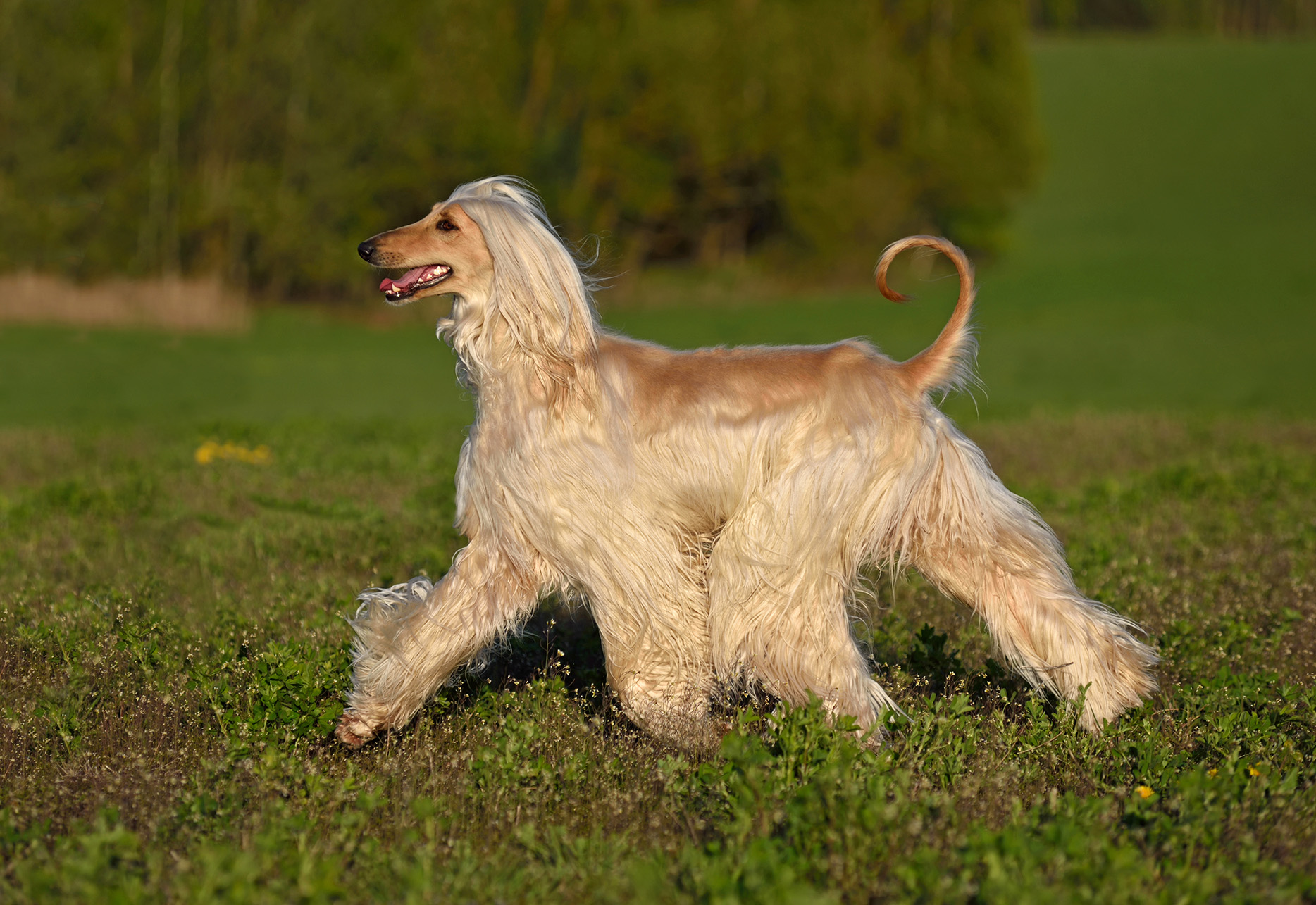
Physically, the Afghan Hound is tall and slender with a graceful, flowing coat that requires regular grooming to maintain its appearance. The coat's fine texture and luxurious look make it one of the most recognizable dog breeds in the world. They have a dignified, aloof demeanor but are also known for being affectionate with their family members.
Afghan Hounds are intelligent but can be somewhat independent or even stubborn, which makes training a challenge at times. They are also active and enjoy running and exploring, requiring ample exercise to stay healthy and happy. Despite their independent nature, Afghan Hounds form strong bonds with their owners and are generally good companions, especially when treated with patience and respect.
This breed thrives in environments where they have plenty of space to move around and is well-suited for owners who are committed to their grooming and exercise needs. While they may not always be the easiest to train, their striking appearance and unique temperament make them a cherished breed for many dog lovers.
History
The Afghan Hound is an ancient breed with a history that dates back thousands of years to the mountainous regions of Afghanistan, Pakistan, and northern India. Known for its striking appearance, the breed is thought to be one of the oldest domesticated dog breeds, with roots intertwined with nomadic cultures of Central Asia. Early depictions in cave paintings and artifacts suggest that the Afghan Hound may have been prized as a hunting and companion dog for millennia. In its homeland, the breed was known as the "Tazi" and was revered for its speed, agility, and keen eyesight, which made it an exceptional sight hound.
The Afghan Hound was originally bred to hunt large game such as leopards, deer, and hare in the harsh terrains of its native region. Its long, flowing coat served as protection against the cold and rugged mountain climate. These dogs were not just working animals but were also valued as symbols of status and beauty by their owners. The breed's ability to navigate challenging landscapes with grace and endurance made it a trusted companion for nomads and hunters alike.
The Afghan Hound's introduction to the Western world began in the late 19th century, when British soldiers and explorers stationed in the Indian subcontinent brought the breed back to Europe. Initially referred to as the "Persian Greyhound" due to its resemblance to other Middle Eastern breeds, the Afghan Hound soon gained recognition for its unique elegance. By the early 20th century, it was formally acknowledged by the United Kingdom Kennel Club and quickly became a popular breed in Europe and North America, celebrated for its beauty and regal demeanor.
In modern times, the Afghan Hound has transitioned from its role as a hunter to that of a show dog and companion. Its luxurious coat and aristocratic bearing have made it a favorite in dog shows, while its independent and sometimes aloof personality adds to its allure. Despite its modern adaptations, the Afghan Hound remains a living symbol of its ancient origins, blending the rugged resilience of its past with the refined elegance admired today.
Afghan Hound Hunting Ability and Traditional Roles
Appearance
Afghan Hounds are known for a long, fine-textured coat, a proud head carriage with a silky topknot, and a tail that ends in a characteristic ring. Breed standards emphasize a strong, dignified frame designed for speed and power, along with notable hipbone prominence and large, well-padded feet.
The coat is typically long and abundant over much of the body, with shorter hair along the “saddle” in mature dogs. Colors can vary widely; many registries accept all colors, though specific markings may be discouraged depending on the standard.
Colors
• Any
• Black
• Black & Silver
• Black & Tan
• Black Brindle
• Black Masked Red
• Blue
• Blue & Cream
• Blue Brindle
• Blue Brindle Domino
• Blue Domino
• Blue with Black Mask
• Brindle
• Cream
• Cream Brindle
• Cream Brindle Domino
• Cream Domino
• Domino
• Red Brindle
• Red Brindle Domino
• Red Domino
• Silver
• Silver Brindle
• Silver with Black Mask
• White
Health
Afghan Hounds, like other large, deep-chested breeds, are sometimes associated with conditions that owners should be aware of, such as bloat (gastric dilatation-volvulus) and certain orthopedic or eye issues. Other concerns are also reported in the breed, and risk varies by line and individual.
A veterinarian can help you understand prevention, early warning signs, and appropriate screening. If purchasing from a breeder, ask what health testing is performed and what conditions have occurred in related dogs.
Care
Coat maintenance is a major part of Afghan Hound care. Regular brushing and combing (often several times per week) helps prevent mats, and many owners bathe and blow-dry routinely to keep the coat clean and tangle-free.
Exercise needs are also significant: daily walks plus safe opportunities to run are ideal. Because many Afghans will chase if given the chance, secure fencing and leash management are important, especially in areas with wildlife or neighborhood cats.
Training
Training an Afghan Hound generally works best with patient, reward-based methods and realistic expectations. They can learn quickly, but they may choose not to comply if training is repetitive or if the reward doesn’t feel worthwhile to them.
Focus on cooperative skills that support day-to-day life: calm handling for grooming, polite leash walking, and reliable routines around doors and gates. Recall can be difficult around distractions, so many owners prioritize management (long lines, enclosed areas) alongside training.
Temperament
This breed is often described as dignified and aloof with strangers, while being affectionate in its own way with family. Many Afghan Hounds have a playful, even silly side during relaxed moments, but they rarely behave like “always eager to please” breeds.
As sighthounds, they commonly have a strong chase instinct. Thoughtful socialization helps them navigate busy environments, and it’s wise to assume that small, fast-moving animals can trigger pursuit unless careful training and management are in place.
Lifestyle
Afghan Hounds often do best in homes that can provide both physical outlets and a low-drama, predictable routine. Many are content to lounge indoors after exercise, but they’re not usually satisfied with a quick potty break as their only activity.
They may be more comfortable with respectful older children than with very young kids who grab at coat or tail. Because grooming and safe exercise are non-negotiable, the breed fits best when owners can budget regular time each week for coat work and supervised activity.
Ownership
Prospective owners should plan for substantial grooming effort and the costs that go with it (tools, professional grooming, and time). It’s also important to think like a sighthound owner: secure fencing, careful door control, and safe, enclosed spaces for running.
Look for breeders or rescues who prioritize temperament stability and health screening, and who can be honest about the day-to-day realities of coat maintenance. Meeting adult dogs in person is especially helpful, since the breed’s reserved demeanor can surprise first-time owners.
Interesting Facts
• The Afghan Hound is a sighthound type associated with Afghanistan; “Tazi” is one of its traditional names.
• Breed standards describe a proud head carriage, long silky topknot, and a tail with a ring at the end.
• Many Afghan Hounds have a strong chase instinct and need secure fencing or leash management.
• The first successfully cloned dog (Snuppy, announced in 2005) was an Afghan Hound.
• The breed’s coat is long and fine and typically requires frequent, thorough grooming.