Quail Hunitng
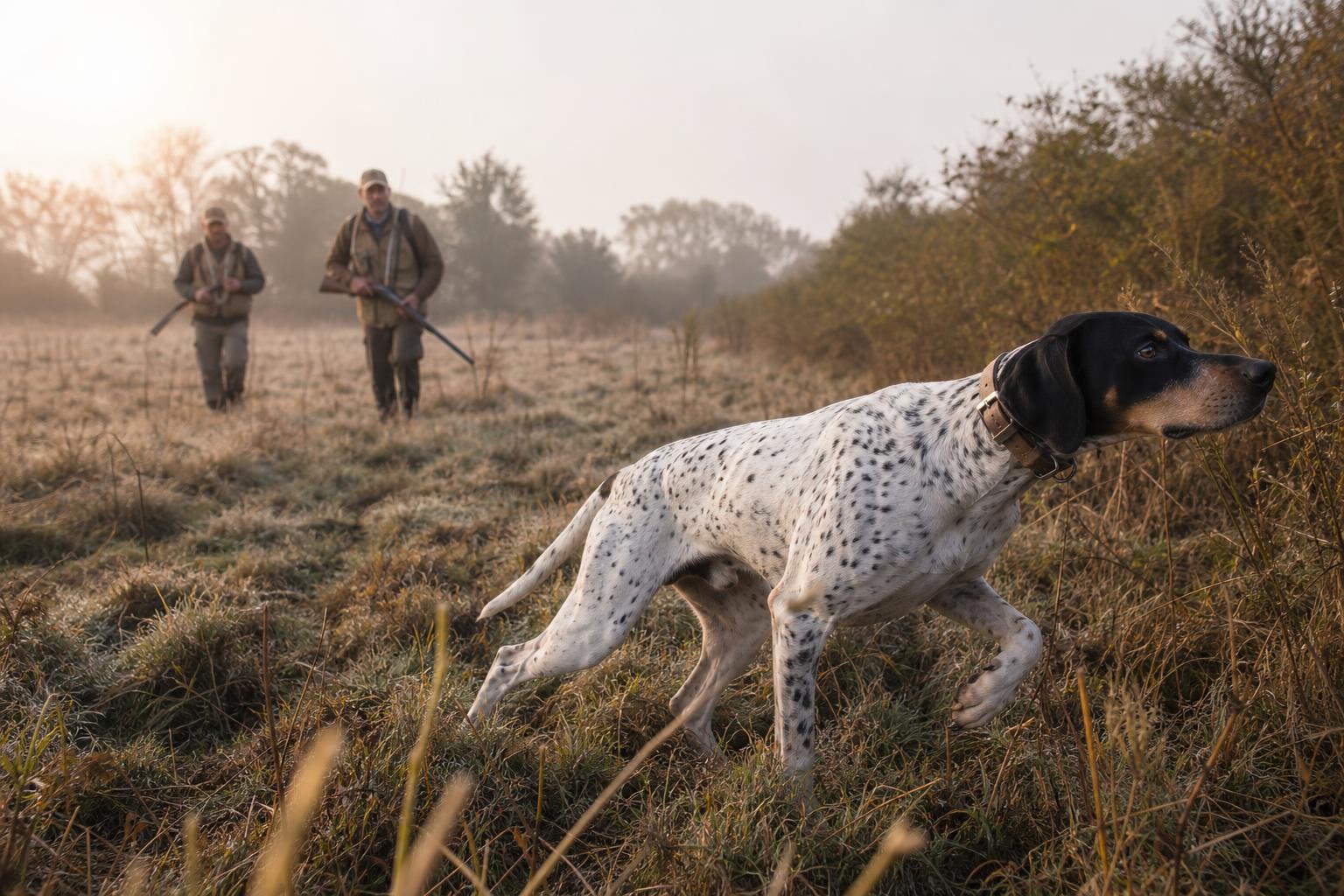
Quail hunting with dogs is a fast, close-to-the-ground kind of bird work where teamwork matters more than distance. Quail don’t typically run like pheasants and they don’t always hold like grouse; they often explode into flight in tight cover, in coveys, and in sudden bursts that reward quick handling and a steady dog. In many regions it’s a social, walk-and-shoot style of hunting that happens in fields, hedgerows, brushy edges, and managed habitat where birds feed and loaf. The dog’s role can vary by style—pointing, flushing, or retrieving—but the shared theme is finding birds efficiently, keeping the action organized, and making the most of brief opportunities. The best days feel like rhythm: dog quarters, scent pops, birds hold or flush, shots happen safely, and the dog is ready for the next find without losing its head.
In pointing styles, the dog’s job is to locate the covey scent, sort it out, and then lock up into a steady point that gives the hunter time to approach and prepare. That steadiness is not just aesthetics; it prevents birds from being bumped out of range and keeps shooting safe. Dogs learn to work into the wind, to adjust range based on cover, and to relocate carefully when birds move. In flushing styles, the dog learns to hunt close, push birds up intentionally, and then sit or hup at the flush so the handler can shoot without a dog racing underfoot. Retrieving adds another layer: mark the fall, go directly, pick up gently, and deliver reliably. Quail are small and delicate, so soft mouth and clean delivery matter. In all styles, obedience is the safety net—recalls, steadiness, and the ability to stop on cue when birds rise.
The hunting conditions teach dogs a lot about scent. Quail often live in cover that holds scent low, and covey scent can be confusing because it’s strong, spread out, and layered. Dogs learn to sort “where birds were” from “where birds are now.” After a covey flush, singles may sit tight nearby or run and re-group, and dogs that can adapt—slow down, use their nose, and methodically pin singles—create more opportunities. Handlers learn pacing too. Moving too fast can blow birds out; moving too slowly can let birds run. Many teams use bells, beepers, or GPS to keep track in thick cover, but the core skill remains reading the dog and moving with purpose. The best training for this kind of work is often done in controlled setups first, then gradually in real cover where the dog learns the messy truth.
What makes quail hunting special is how much it rewards clean fundamentals and calm excitement. A dog that is frantic will bump coveys and scatter chances. A dog that is thoughtful will produce repeated opportunities and keep the hunt safe. The handler’s job is to keep the dog in the right range, reinforce steadiness, and make sure the experience stays fun for the dog—because bird work is partly desire. When the partnership is good, you can feel it: the dog hunts with confidence, checks in without being nagged, and stays steady when the birds erupt. It’s quick, it’s traditional, and it’s one of the best places to see a bird dog’s instincts refined into reliable field behavior.
- American Brittany
- Bracco Italiano
- Braque DAuvergne
- Braque du Bourbonnais
- Braque Francais
- Cesky Fousek
- Deutsch Drahthaar
- Deutsch Kurzhaar
- English Pointer
- English Setter
- Epagneul Breton
- French Brittany
- French Spaniel
- German Longhaired Pointer
- German Shorthaired Pointer
- German Wirehaired Pointer
- Gordon Setter
- Hungarian Vizsla
- Hungarian Wirehaired Vizsla
- Irish Red and White Setter
- Irish Red Setter
- Irish Setter
- Italian Spinone
- Korthals Griffon
- Large Munsterlander
- Llewellin Setter
- Portuguese Pointer
- Pudelpointer
- Slovakian Rough Haired Pointers
- Small Munsterlander
- Spanish Pointer
- Spinone Italiano
- Weimaraner
- Wirehaired Pointing Griffon