
Blood Trailing/Wounded Game Recovery
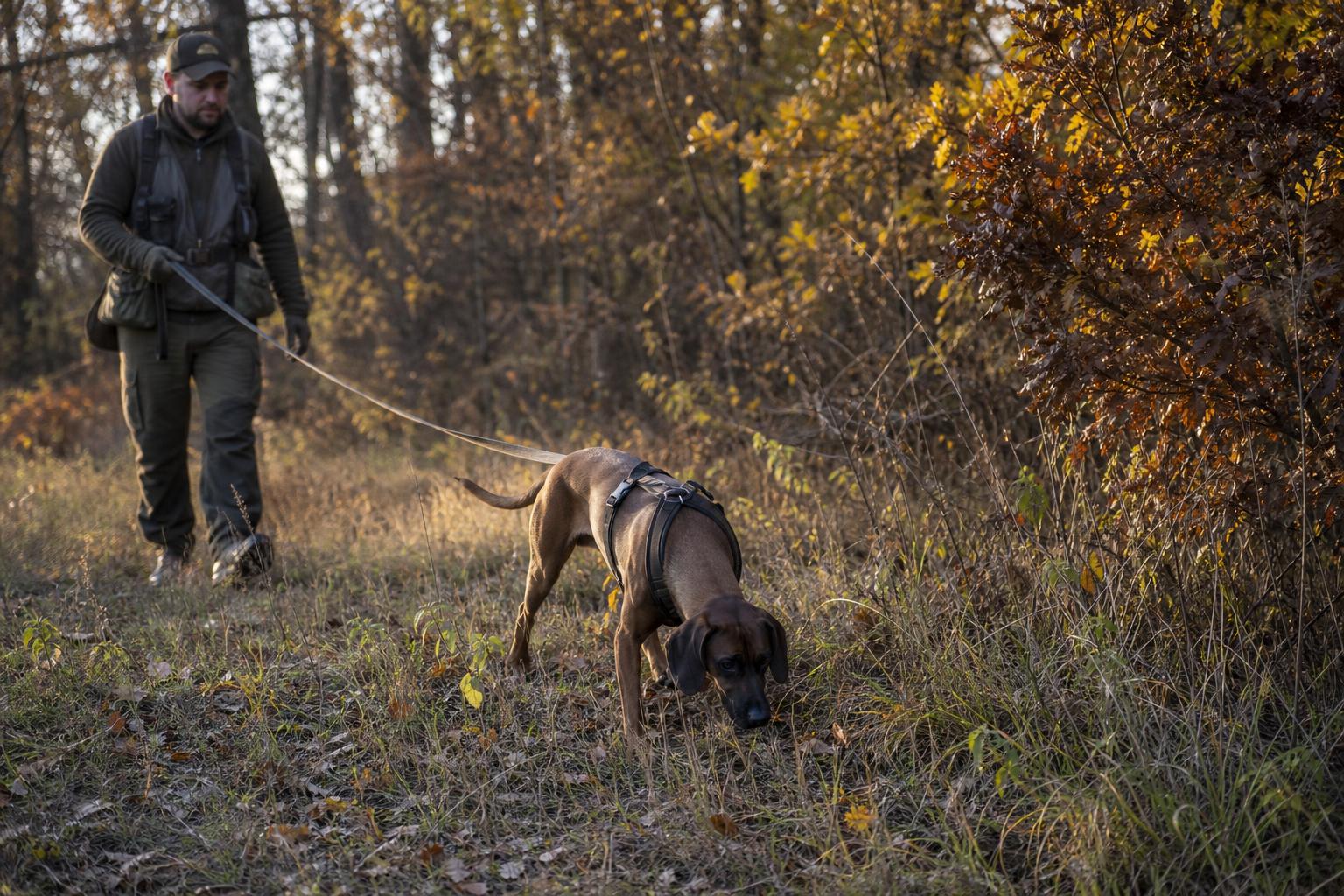
Blood trailing and wounded game recovery is the work of teaching a dog to follow the scent trail left by an injured animal and help the handler locate it efficiently and ethically. It sits at the intersection of respect and practicality. No one wants a poor hit, but it happens, and the difference between recovering an animal and losing it often comes down to time, decisions, and a dog’s nose. This work is not about speed for its own sake. It’s about accuracy: staying on the correct line when scent is sparse, when the animal changes direction, when the trail crosses other animals, when weather and terrain complicate everything. It also requires discipline from the human side. The handler must be willing to move slowly, to read sign, to pause when conditions call for it, and to let the dog work without being rushed by emotion.
Training begins with building a clear picture for the dog: what scent matters, what “success” looks like, and how to communicate it. Many teams start with short, fresh trails using hoof, hide, or blood from the target species, paired with a high-value reward at the end. The dog learns to put its nose down and follow the line in a harness on a long lead, and the handler learns to keep the line quiet and to avoid pulling the dog off odor. Early trails are easy on purpose—straight lines, minimal distractions—because confidence is the foundation. From there, you add complexity the way real recoveries demand it: aged trails, sparse blood, interruptions where the animal beds, turns, backtracks, or crosses water. You also train for “losses,” those moments where the dog arrives at a spot and the odor picture disappears. A well-trained dog doesn’t panic; it casts, searches, and re-acquires. The handler learns to recognize the difference between a dog that is truly lost and a dog that is solving. That ability to wait—without interfering—is one of the hardest skills for people.
Real-world recoveries are full of variables. Wind can carry scent off the line, especially in open fields. Rain can dilute blood sign, yet ground disturbance can still carry odor. Dry heat can make scent weaker mid-day and stronger later. Thick vegetation can trap odor; rocky ground can make it scarce. The trail might cross livestock, deer, coyotes, or other animals that offer tempting alternate lines. The dog must learn discrimination: stay with the target animal’s odor picture rather than switching to something fresher. Many handlers also teach the dog to indicate specific events: a bed, a jump, a turn, or the point where the animal entered water. Those indications can help the human make good decisions about approach and safety. Safety matters because an injured animal can still be dangerous, especially boar, bear, or large deer in close cover. That’s why ethical recovery work includes planning—approach routes, visibility, firearm readiness where legal, and a mindset that prioritizes a clean, humane finish.
What makes wounded game recovery so valuable is that it prevents waste and reduces suffering. A dog that can work an old trail in difficult conditions expands the window for successful recovery. A handler who understands how to interpret the dog avoids pushing an animal too soon and losing it permanently. Over time, teams develop a calm rhythm: check sign, start the dog, follow quietly, pause when the dog is sorting, move when the dog is committed, and trust the process. The satisfaction is not flashy. It is sober and meaningful—knowing that you did the responsible thing after the shot, and that you used every available tool to recover the animal. A well-trained trailing dog doesn’t just find game; it teaches the human patience, humility, and respect. And when the dog finally leads you to the animal, the moment carries weight, because you know it wasn’t luck. It was skill, built carefully, and used for the right purpose.