
Explosives Detection
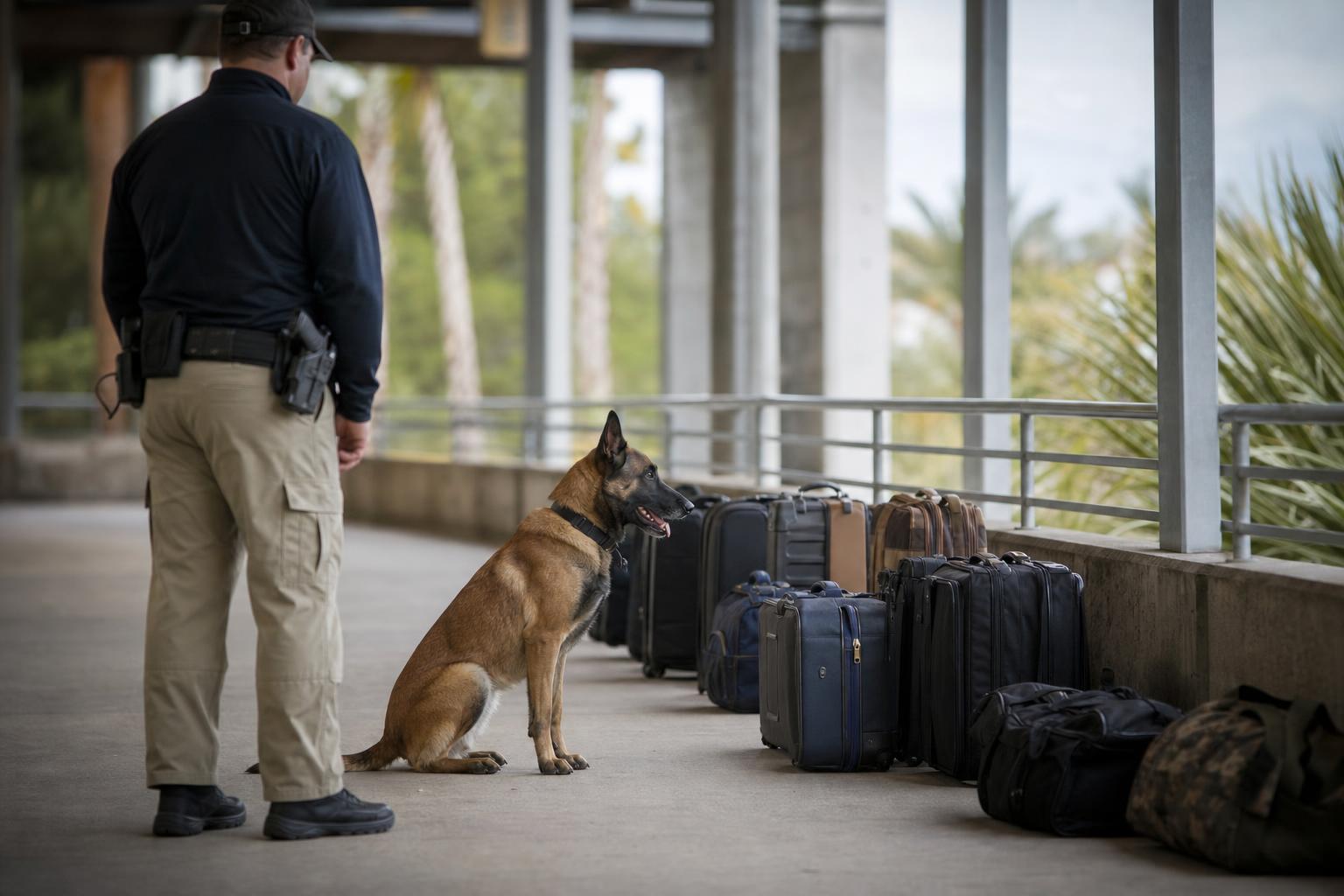
Explosives detection is the work of training a dog to locate explosive-related odors and communicate the find with a clear, trained indication. The stakes are higher than most detection work because safety is central: the dog is trained to locate odor without disturbing the source, and the indication is designed to minimize risk. In many programs the dog is trained to freeze, sit, or lie down at the strongest odor picture rather than pawing or biting. The dog’s job is to find. The human’s job is to make decisions. That division is essential, and good training keeps it clean.
The foundation is odor recognition and confidence. Dogs learn that specific target odors predict reward, and they learn to hunt for those odors across varied environments. Search patterns are taught for vehicles, luggage, buildings, open areas, and specialized settings like aircraft or cargo. The dog learns to work with independence—pushing into odor, checking seams, working airflow—while still staying connected enough that the handler can manage safety and interpret the indication. The handler learns to avoid “leading” the dog, because handler influence is one of the fastest ways to create unreliable alerts. Blind searches, varied hides, and strict reinforcement criteria help keep the dog honest.
Environmental complexity is a defining feature. Odor can be trapped in crevices, carried by air currents, or contaminated by other materials. Dogs train in places that are uncomfortable: loud, tight, slippery, full of people, full of distractions. They learn to climb stairs, work around machinery, and stay focused despite movement and noise. They also learn neutrality around crowds and around sudden changes, because a dog that startles easily cannot do this work safely. Conditioning matters too. Searches can be long, and the dog must remain careful and methodical rather than frantic.
The best explosives detection teams have a particular look: calm intensity. The dog is eager to work, but not chaotic. The indication is unmistakable, but not dangerous. The handler reads the dog’s odor response rather than forcing a conclusion. When the dog finds the target odor, the behavior changes in a way that experienced handlers recognize immediately—slowing, deep sniffing, pinpointing—and then the trained indication appears. That clarity is the whole point. It turns a dog’s natural ability into a controlled, repeatable skill that supports real safety decisions. Done well, it is one of the most impressive demonstrations of canine problem-solving and handler teamwork you can see.