
Mondioring
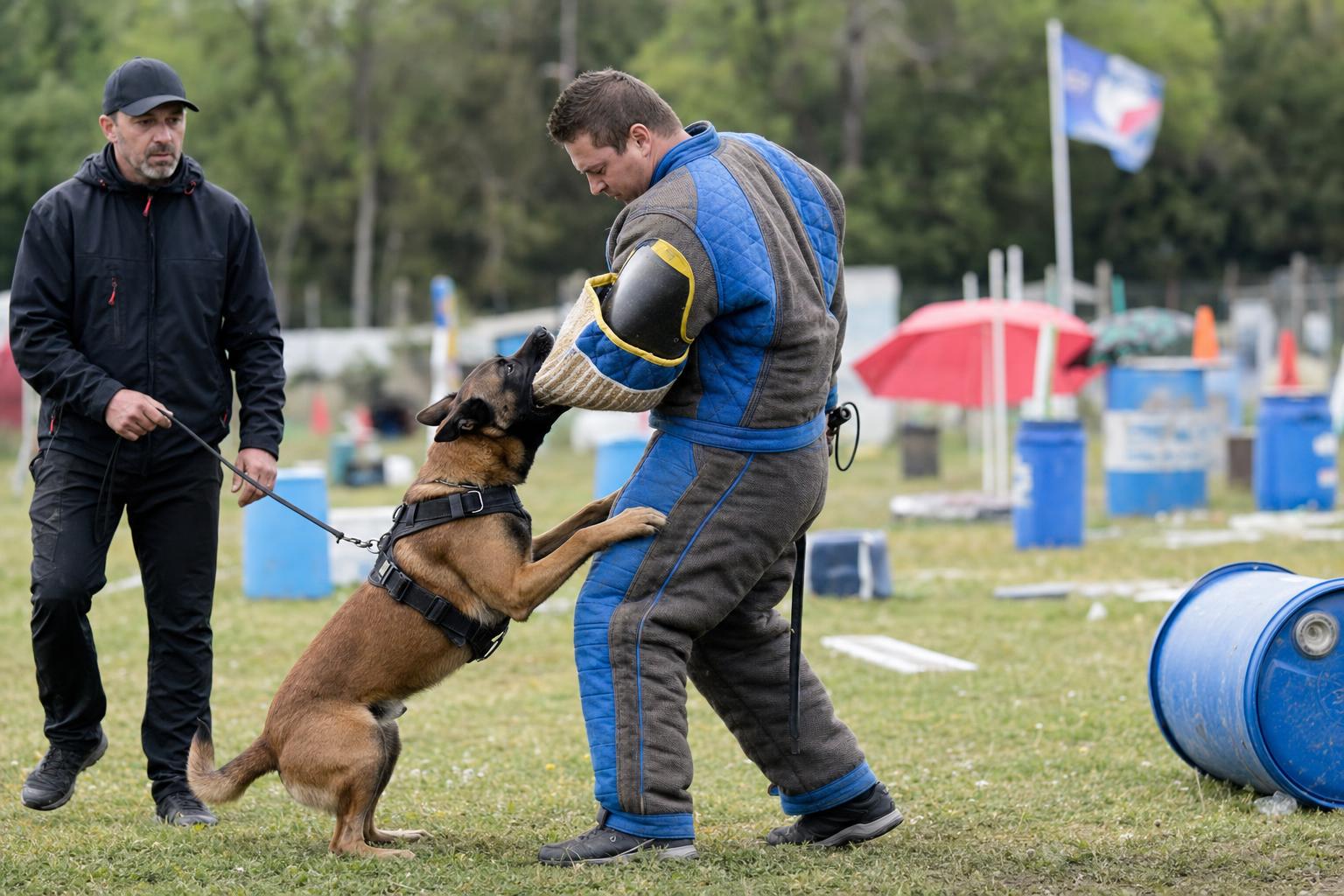
Mondioring is a protection sport built to challenge a dog’s stability and responsiveness in unpredictable-looking scenarios. The field can include props, costumes, environmental distractions, and unusual setups that test whether the dog can stay clear-headed. It borrows elements from other ring sports while adding its own twist: the dog must perform skills that are familiar—heeling, positions, retrieves, guarding, controlled engagement—while the surrounding context is intentionally strange. A dog that relies on routine alone will struggle. A dog that understands the underlying cues, and trusts the handler, can thrive.
The obedience work in mondioring emphasizes control amid distraction. Heeling is expected to be close and attentive. Positions must be quick and accurate. The dog may be asked to stay while distractions happen around it, or to perform retrieves with odd objects rather than a standard dumbbell. Training for this is not just drilling the same picture. Teams often train concepts: the cue means the same thing whether the handler is wearing a hat or standing near a tarp, whether the retrieve object is a wooden block or a rubber toy. Dogs learn that novel props do not change the rules. Handlers learn to keep cues clean and to avoid accidental prompts. This is where patient foundation work pays off.
The protection elements are designed to evaluate nerve, drive, and control in a more theatrical environment. Helpers may present pressure in varied ways, and the dog must show commitment without losing judgment. The dog is asked to engage when appropriate, release instantly on cue, and maintain control in guarding behaviors. There are also exercises that test neutrality—ignoring food, ignoring non-threatening people, staying stable while unusual things occur. The complexity can be stressful for some dogs, so good training emphasizes confidence and clarity rather than conflict. You want a dog that believes it can solve the problem. You do not want a dog that is simply reacting.
Mondioring is demanding for handlers as well. The variability means you cannot memorize one routine and hope for the best. You must be able to read the dog, manage arousal, and adjust in the moment. Conditioning matters because the work can be physically intense, and mental stamina matters because the dog is asked to maintain focus over a long sequence. When a team is truly prepared, it is obvious. The dog looks stable in weird environments, powerful in engagement, and soft in obedience—meaning responsive and clean. That combination is hard to build. It requires careful foundation, thoughtful proofing, and an insistence that the dog always understands what earns success. For people who like training that rewards real comprehension, mondioring is one of the most interesting arenas available.