Decoy Dog Work
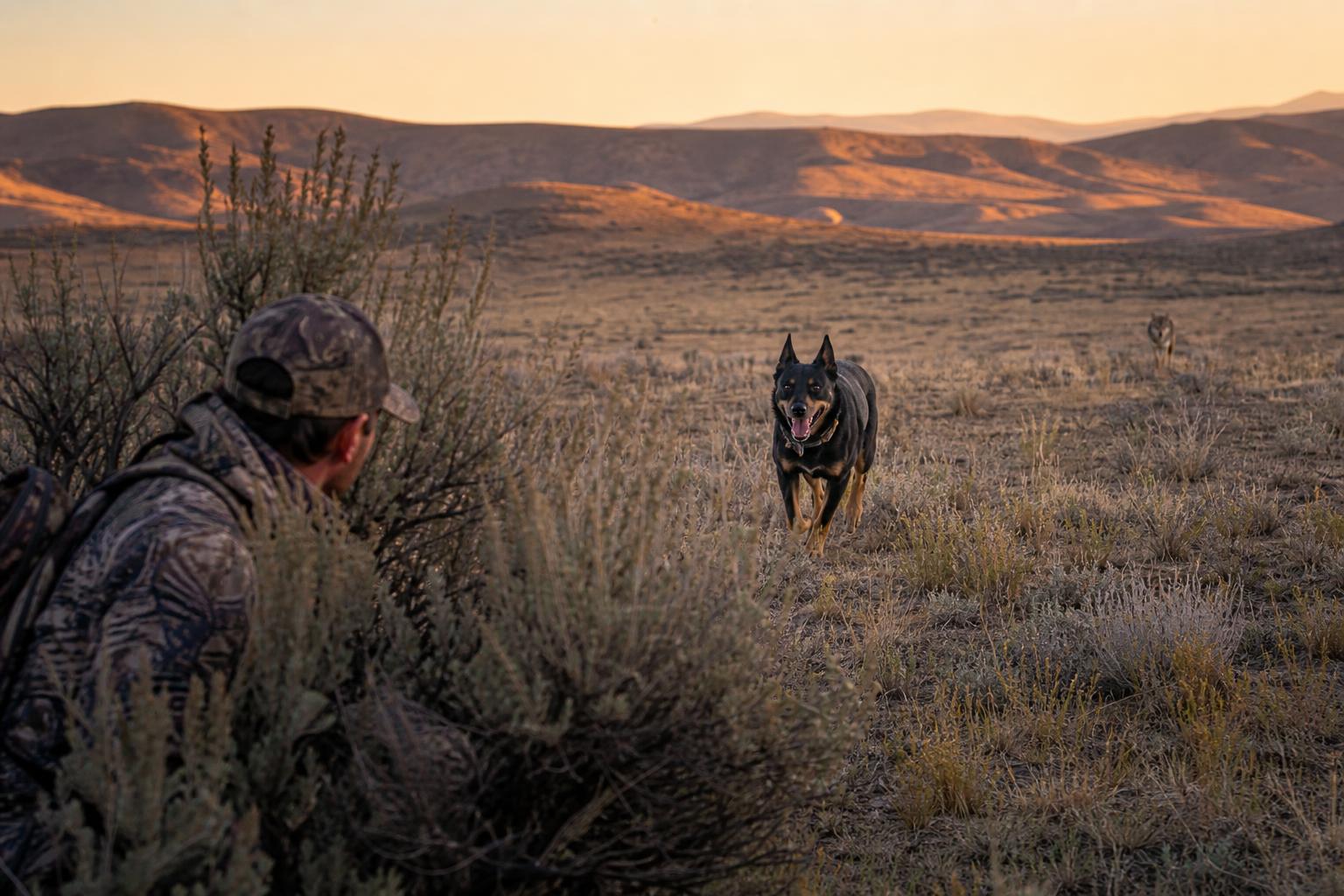
Decoy dog work is a hunting method where a dog is used to draw game—most commonly coyotes, and sometimes hogs—into a more favorable position for the hunter. With coyotes, the dog may be sent out to engage at a distance, then retreat, triggering the coyote to follow. The dog’s movement and behavior can provoke territorial or curiosity responses, pulling coyotes off cover and into shooting range. This is not random chasing. Done correctly, it’s a deliberate pattern: engage just enough, then come back, then repeat as needed while staying under tight handler control.
The dog’s temperament is critical. A suitable dog is confident but biddable, social enough to read canid body language, and steady enough to avoid panic when pressured. The dog must have a reliable recall and the ability to respond to directional cues at a distance. Many handlers train a dog to range out, locate coyotes, and then return to the hunter’s position, effectively bringing the interaction back. The dog also needs to avoid over-committing. A dog that fights too hard can be injured; a dog that retreats too early may fail to draw coyotes. The sweet spot is a dog that can ‘dance’—press, retreat, and re-engage while staying responsive.
Training usually starts with obedience, engagement, and controlled exposure. Dogs learn to work in open country, ignore distractions, and return instantly. They learn to respond to whistle and hand signals. Some dogs develop natural skill at reading coyotes; others need careful development and mentorship from experienced dogs. Safety management is constant. Coyotes can injure dogs, and packs can overwhelm an individual. Handlers choose setups that provide visibility and escape routes. Some use protective vests. Many keep dogs close until a coyote is located, then send and recall in short, controlled sequences. The dog’s welfare is the limit; if conditions become unsafe, the correct decision is to stop.
When decoy dog work is done well, it can be remarkably effective and surprisingly controlled. The dog stays within a working bubble, returning reliably and avoiding unnecessary contact. The handler remains focused on safe shot angles and on the dog’s position at all times. The result is a method where the dog’s role is purposeful: create movement, hold attention, and bring the interaction into range. It is a specialized job that requires serious training and serious judgment, and it should be approached with the same mindset as any high-risk working-dog task—control first, effectiveness second.