
Companion/Family Dog
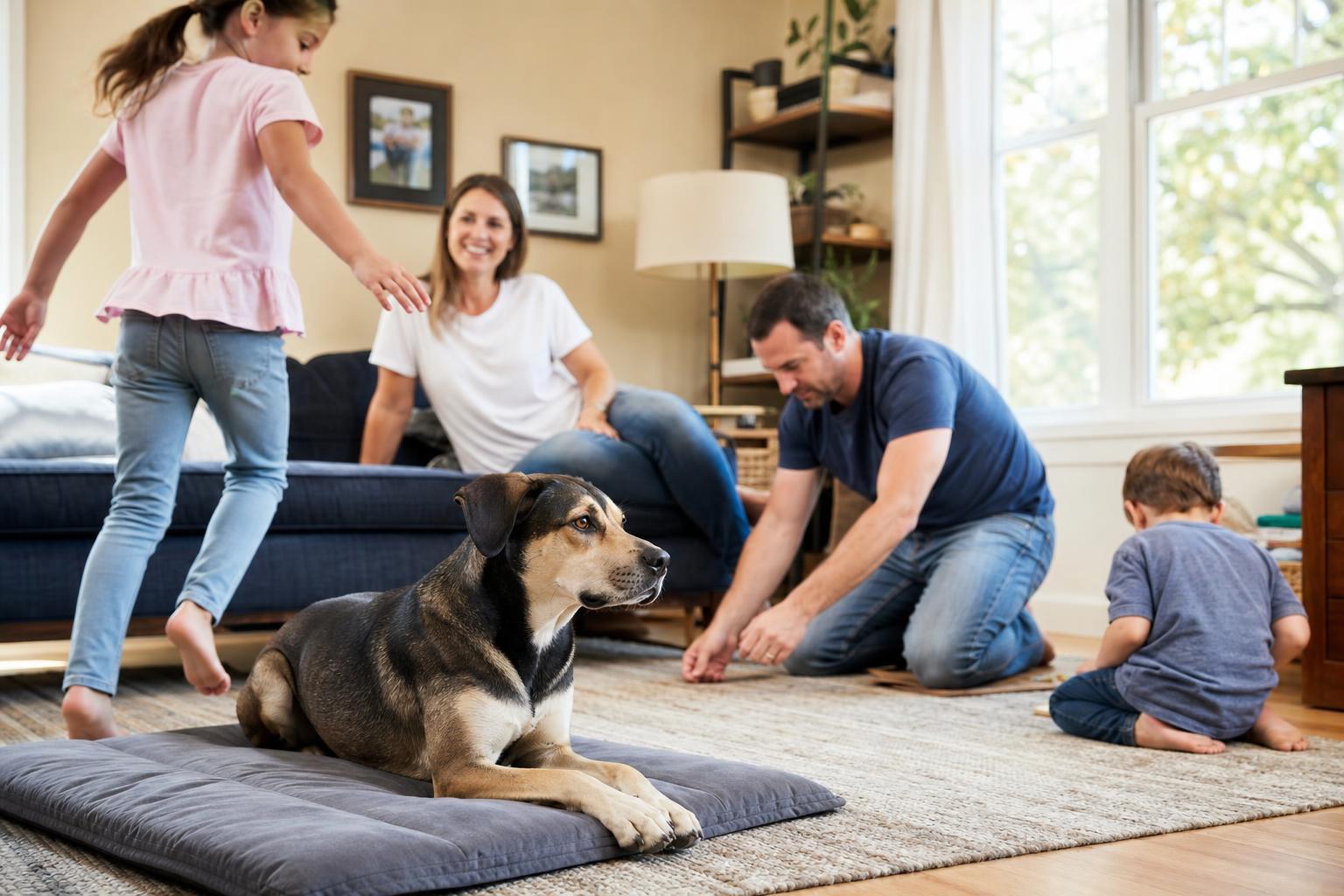
Companion and family dog work is about shaping a dog to live well with people—safely, politely, and with emotional stability. It’s not glamorous, but it’s what most dog owners actually need. A good companion dog can settle in the home, handle visitors without chaos, walk on leash without dragging, and share space without constant management. It can be left alone without panic. It can be touched, groomed, and handled without conflict. It can ride in the car, visit a friend’s house, and move through the world without becoming a problem. In short, it’s a dog that fits into human life while still being a dog.
The foundation is a mix of training and lifestyle. Training covers basics—recall, loose-leash walking, sit, down, stay, place, drop it, leave it—but the deeper piece is emotional regulation. A dog that is anxious, over-aroused, or under-exercised will struggle no matter how many cues it “knows.” Good companion development includes predictable routines, appropriate exercise, and mental enrichment so the dog is not inventing jobs like barking at windows or shredding furniture. Socialization matters too, but in the correct sense: not forcing the dog to meet everyone, but teaching the dog that the world is normal and manageable. That includes exposure to noises, surfaces, vehicles, people of different ages, and other animals in a way that builds confidence rather than overwhelm.
A well-adjusted family dog is also defined by manners around people. That means greeting politely, keeping teeth and paws off people, taking food gently, and learning to settle when guests arrive. It also means learning boundaries: where the dog can go, what furniture rules apply, how to wait at doors, how to share space around meals. In homes with kids, it means extra management and teaching. Children need to learn dog-safe behavior, and dogs need to learn that children are unpredictable but not threatening. Many families also teach practical “house skills” that make life smoother: going to a mat when the doorbell rings, waiting calmly while the leash is put on, staying out of the kitchen while food is prepared, and relaxing in a crate or safe room when needed.
The payoff is huge because it’s the difference between owning a dog and enjoying a dog. A companion dog with good habits gives people freedom: you can have friends over, travel, go on walks that feel relaxing, and trust the dog to make decent choices. That trust comes from repetition and consistency, not from dominance or luck. Done well, companion and family dog training produces an animal that is affectionate without being frantic, confident without being pushy, and responsive without being robotic. It becomes a genuine relationship—one where the dog feels safe, the humans feel supported, and daily life runs with fewer sharp edges.
- Affenpinscher
- Bernese Mountain Dog
- Biewer Terrier
- Brussels Griffon
- Cavachon
- Cavalier King Charles Spaniel
- Chihuahua
- Chinese Crested
- Chiweenie
- Coton de Tulear
- English Toy Spaniel
- French Bulldog
- Greater Swiss Mountain Dog
- Havanese
- Japanese Chin
- Leonberger
- Maltese
- Miniature Pinscher
- Newfoundland
- Papillon
- Pekingese
- Pomeranian
- Poodle
- Pug
- Saint Bernard
- Shih Tzu
- Shih-Poo
- Toy American Eskimo
- Toy Poodle