
Weight Pull
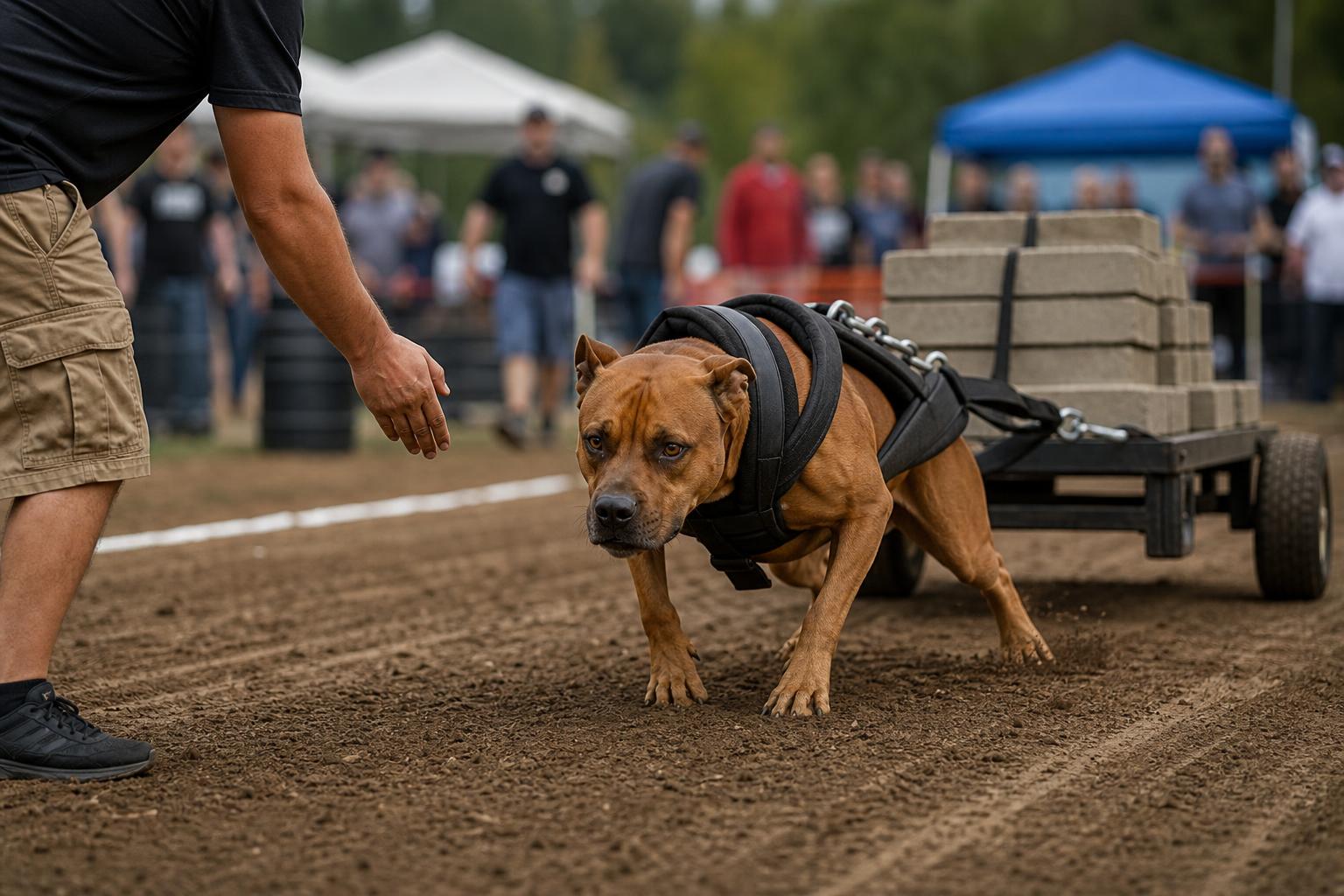
Weight pull is a strength-and-control activity where a dog pulls a weighted cart or sled for a measured distance, usually on a track, under specific rules. The image can look intense—harness, heavy load, crowd noise—but the best teams don’t rely on chaos or desperation. They rely on conditioning, technique, and a dog that understands how to work efficiently. In most formats the dog starts the pull from a standstill, builds momentum, and then maintains steady forward motion until the load crosses the finish. Success is a blend of muscular power, traction, mental commitment, and handler skill. The dog needs to want the job and also feel safe doing it.
Training begins with harness comfort and mechanics. Dogs learn to lean into a properly fitted pulling harness and move forward on cue. Early sessions use very light loads so the dog learns the picture without strain. The handler builds a consistent routine: set up, cue, praise, reward, rest. Over time, load increases gradually, and technique becomes a focus. Dogs learn to keep a straight line, to maintain steady pressure rather than jerky bursts, and to reset after a stall. Many teams teach a specific cue that means “dig in,” and they also teach a calm stop cue so the dog can disengage without conflict. The handler’s timing and energy matter, but so does restraint. Over-hyping can create sloppy movement and higher injury risk. Quiet confidence often produces better pulls.
Conditioning and safety are non-negotiable. Pulling heavy weight stresses shoulders, elbows, wrists, hips, and spine. Dogs need gradual strength building, joint-friendly warm-ups, and careful management of volume. Many handlers use supplemental conditioning—hill work, controlled resistance, core exercises, balance work—to build stability and prevent injury. They also monitor paw health and traction, because slipping turns a strength task into a strain task. A well-run program keeps the dog’s body and mind fresh: fewer maximal attempts, more technical practice at submax loads, and enough rest between sessions. Just as important, ethical weight pull respects the individual dog. Not every dog is structurally suited to heavy pulling, and not every dog enjoys the work. The dog’s willingness should look like clear engagement, not avoidance.
When weight pull is done thoughtfully, it can be a satisfying job for strong, driven dogs and an excellent showcase of conditioning and handler-dog teamwork. The dog learns how to focus under pressure, how to persist through resistance, and how to respond to cues even when effort is high. The handler learns how to train strength safely and how to read fatigue before it becomes injury. And the best teams look surprisingly calm. The dog leans in, moves forward with purpose, and finishes the pull without drama—then happily takes a reward and walks away. That calm, controlled power is what makes the work appealing to people who value both athleticism and clear training.