
Bikejoring
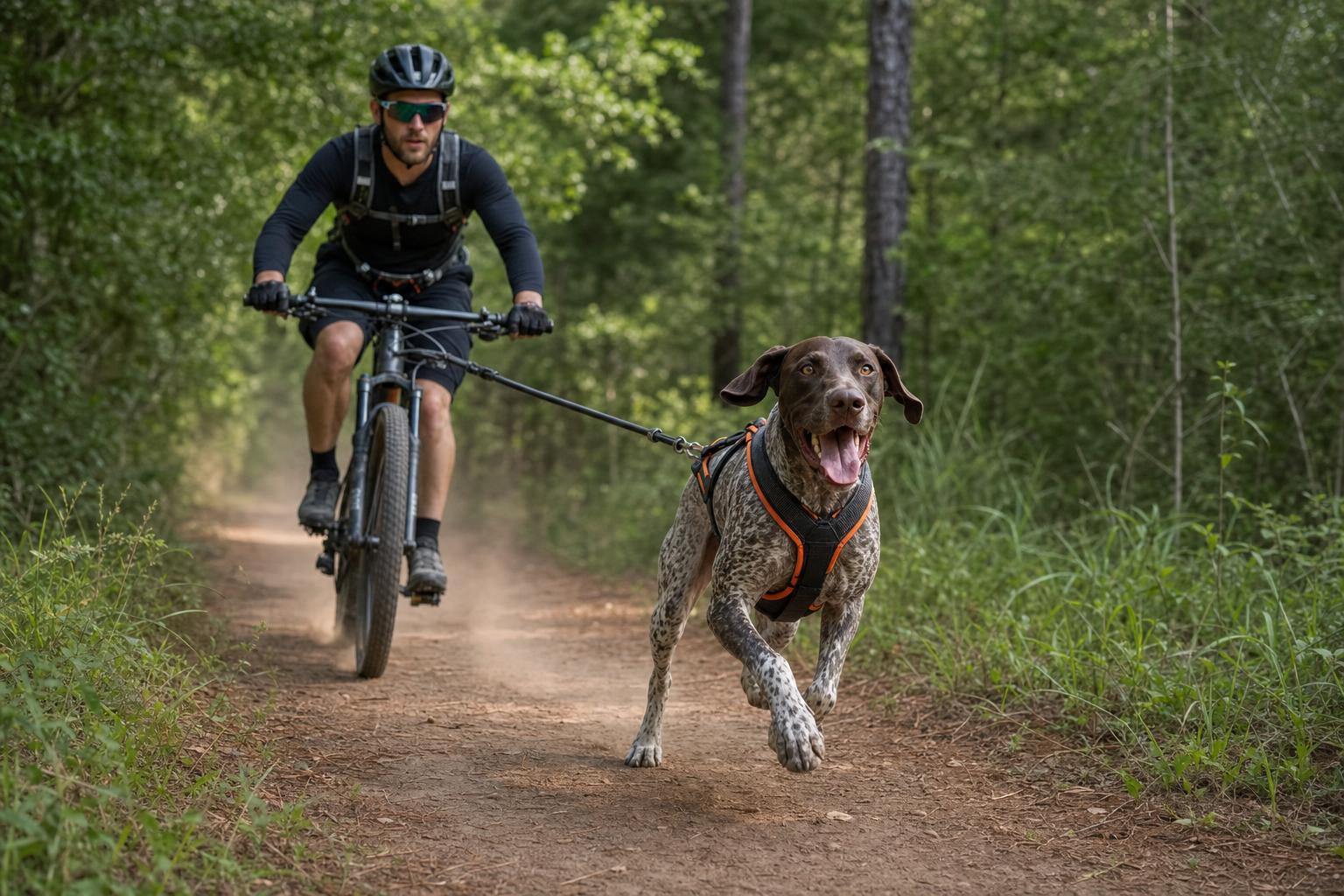
Bikejoring is a sport where a dog pulls a bicycle while the rider pedals, steers, and manages speed. It’s essentially skijoring translated onto wheels, which makes it accessible in seasons without snow. The dog works in a pulling harness attached to a towline and bike antenna that keeps the line away from the front wheel. Done well, it’s fast, smooth, and controlled: steady forward drive, clear directional cues, and a dog that can ignore distractions while running at speed. Done poorly, it’s a recipe for tangles and wipeouts. The difference is training and equipment, plus an honest respect for the dog’s fitness and the rider’s handling skills.
Training starts with the basics long before the bike ever moves. The dog learns what the harness means—pull forward—and learns to keep a straight line without darting side to side. Many teams teach directional cues (gee, haw), passing cues (on by), pace cues (easy), and stop cues (whoa). Those cues are first built on walks and jogs, then with a scooter or a slow bike, then gradually at higher speed. The dog also learns start-line behavior: wait, focus forward, explode on release without crossing in front. That impulse control is not optional; it’s what keeps everyone upright. Riders also learn how to maintain consistent line tension and avoid sudden braking or swerving that can jerk the dog.
Safety and conditioning deserve real attention. Pulling at speed loads a dog’s shoulders, back, and core differently than free running does. Good teams build fitness gradually, keep sessions short at first, and monitor paws, hydration, and heat. They choose routes with safe footing, good visibility, and minimal traffic. Equipment matters: a pulling harness that allows full shoulder extension, a towline with bungee to reduce shock, and a bike setup that prevents the line from tangling in the wheel. Dogs also need to be socially neutral and environmentally steady. A dog that lunges at other dogs, wildlife, or people is unsafe in a bikejoring context. Proofing around distractions is part of the job.
Bikejoring is popular because it gives athletic dogs a serious outlet and gives humans a way to cover distance together. It can be competitive—timed runs on set courses—or recreational—trail rides with a pulling partner. Either way, the best sessions feel like teamwork rather than towing. The dog runs confidently and straight, responding to cues at speed. The rider stays balanced, communicates early, and makes choices that protect the dog’s body over the long term. When those pieces are in place, bikejoring becomes a satisfying rhythm: harness on, line tight, forward drive, and shared motion that leaves both dog and human pleasantly tired instead of stressed.