
Skijoring
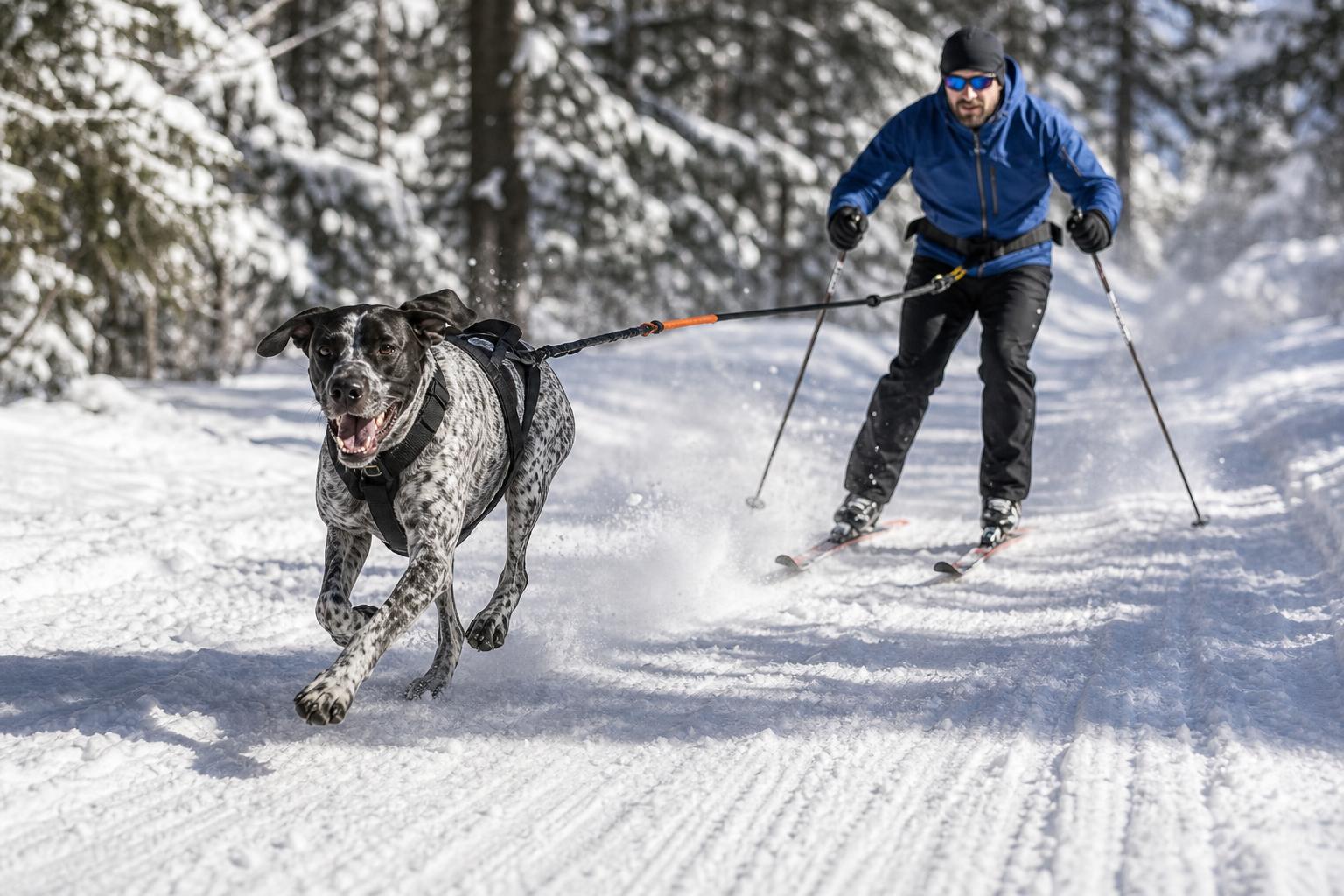
Skijoring is a winter sport where a person on skis is pulled by one or more dogs, connected by a towline and usually a specialized harness and belt system. It’s a blend of human athleticism and canine drive. The dog provides forward pull and momentum; the skier contributes glide, balance, and steering. What makes it fun is the shared pace. When things click, it feels like flying—smooth pull, quiet line tension, clean turns, and a dog that is focused forward. But because you’re combining speed with winter footing, good training and good equipment matter. Skijoring isn’t just “let the dog pull you.” It’s teaching the dog and human to move as a coordinated unit.
Training begins with harness skills and directional cues. Dogs learn that the harness means “pull forward,” and that the line should stay tight without the dog weaving side to side. Many teams use simple cues—gee for right, haw for left, easy for slow, whoa for stop, on by to ignore distractions. These cues are first trained on walks, then on runs, then on skis. Early sessions are short so the dog’s enthusiasm stays high and the dog doesn’t learn sloppy patterns. The dog also needs to learn passing etiquette—running past other dogs and people without reacting—because trails often include multiple users. The human learns body mechanics too: how to maintain balance, how to assist with skating steps, and how to manage line tension so the dog isn’t jerked by sudden changes.
Safety and conditioning are central. Dogs need a harness that allows full shoulder extension without rubbing. They need paw protection when ice or abrasive snow is present. They need gradual conditioning to avoid soft-tissue injury, because pulling at speed can strain shoulders and backs if the dog is unfit. Humans need safe trails, awareness of downhill hazards, and a plan for emergencies. Training also includes stopping and “park it” skills, because stopping on skis while a dog is excited is a learned behavior. Many teams practice controlled starts and controlled stops, teaching the dog that waiting calmly is part of the game. That arousal management is the difference between a smooth session and a chaotic one.
Skijoring is popular because it gives dogs a job that matches their instincts—run forward, pull, stay focused—and it gives humans a way to move faster and farther with the dog. It’s also a relationship builder. The dog learns to take cues at speed and to ignore distractions. The human learns to trust the dog’s forward focus and to communicate clearly. For breeds that love to run—northern types, pointer types, many athletic mixes—it can be a perfect winter outlet. Done well, it feels less like “exercise” and more like shared adventure: you and your dog moving through cold air, reading the trail together, and turning simple cues into smooth, fast motion.