
Jagd Terrier
The Jagd Terrier (Deutscher Jagdterrier) is a purpose-bred German hunting terrier created after World War I with a single-minded focus: working ability. The FCI standard describes it as a versatile hunting dog, particularly suited to going to ground and also working as a flushing dog.
This is not a “terrier for everyone.” Jagd Terriers are typically best for experienced, active owners—often hunters—who want intensity, drive, and determination in a compact package and who can provide consistent training and real work outlets.
Description
The Jagd Terrier, also known as the German Hunting Terrier, is a versatile and tenacious breed developed in Germany during the early 20th century. Bred specifically for hunting, this small but fearless dog excels in tracking, flushing, and retrieving game. The breed was created by crossing various terrier breeds, including the Fox Terrier and Old English Terrier, with the goal of producing a rugged, determined hunting companion capable of working on land and in water. Its name, "Jagd," comes from the German word for hunting, reflecting the breed's primary purpose.
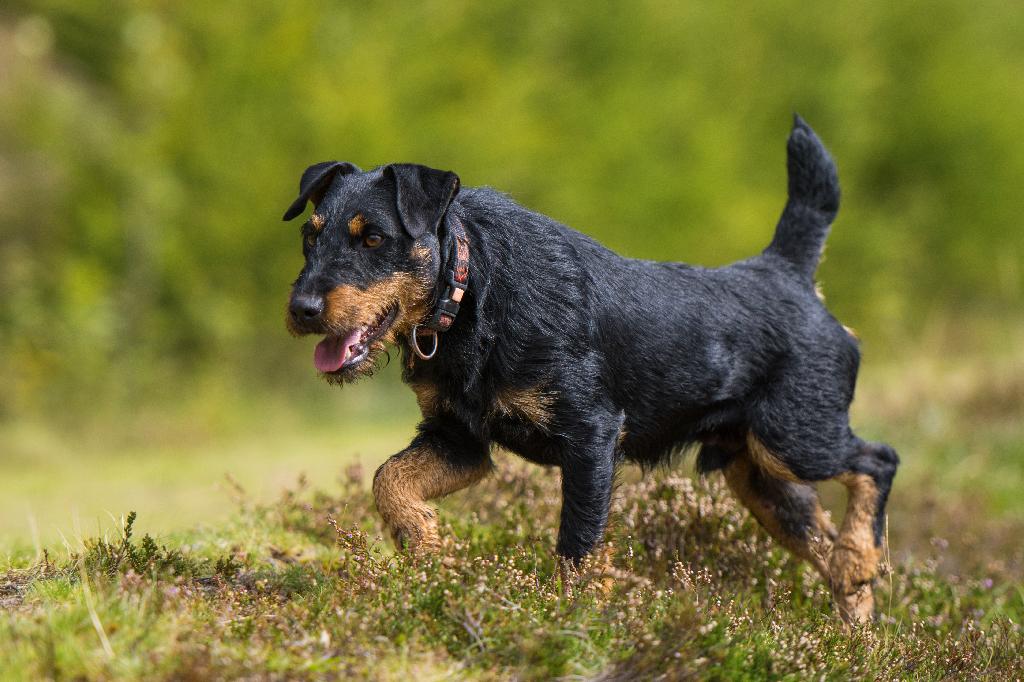
Physically, the Jagd Terrier is compact and muscular, standing about 13 to 16 inches tall and weighing between 17 to 22 pounds. It has a dense, weather-resistant coat that can be either smooth or rough, typically black and tan with well-defined markings. Its keen, dark eyes and high-set, V-shaped ears give it an alert and intelligent expression. This breed is built for endurance and agility, with a powerful, streamlined body that enables it to navigate challenging terrain with ease.
The Jagd Terrier is renowned for its bold and determined temperament. It is highly intelligent and driven, with a strong work ethic that makes it an exceptional hunting partner. However, its energy and intensity mean it is best suited to experienced handlers who can provide consistent training and leadership. While loyal and affectionate with its family, the Jagd Terrier's independent and fearless nature requires a firm but fair approach to training. Socialization from an early age is also important to ensure the dog adapts well to different environments and situations.
Due to its high energy levels and strong prey drive, the Jagd Terrier thrives in active homes where it can have plenty of physical and mental stimulation. Activities like tracking, agility, and obedience training are excellent outlets for its energy and intelligence. While it can be a loving companion, this breed is not ideal for sedentary households or novice dog owners. For those who can meet its needs, the Jagd Terrier offers unwavering loyalty, exceptional hunting skills, and a spirited personality that makes it a standout among working terriers.
History
The Jagd Terrier, or German Hunting Terrier, is a versatile and tenacious working breed that originated in Germany during the early 20th century. It was developed by a group of dedicated hunters and dog enthusiasts who sought to create a small, efficient hunting dog capable of excelling in a variety of tasks, particularly in underground hunting. The breed was designed to specialize in tracking, flushing, and retrieving game such as foxes, badgers, and small vermin. Its name, "Jagd," means "hunt" in German, reflecting its primary purpose.
The breed’s foundation began with the deliberate crossing of old German Fox Terriers with various other terrier breeds, including the Welsh Terrier and Black and Tan Terrier. This selective breeding was aimed at creating a dog with strong prey drive, determination, and resilience. Unlike many terriers of the time, which were increasingly bred for show purposes, the Jagd Terrier was developed solely for its working abilities. The result was a compact, agile, and courageous dog with a dense, weather-resistant coat and a fearless demeanor.
The Jagd Terrier gained popularity among German hunters for its versatility and reliability. It could work both above and below ground, track wounded game, and even retrieve from water. The breed’s compact size and adaptability made it particularly valuable in Germany’s diverse hunting environments. During World War II, the breed’s development faced challenges, but its numbers were preserved thanks to the dedication of its advocates.
Today, the Jagd Terrier remains a favorite among hunters in Germany and other parts of Europe, though it is less well-known outside of these regions. It is valued for its intelligence, endurance, and unwavering determination. While primarily a working dog, the Jagd Terrier’s loyalty and energy have also made it an appealing choice for experienced dog owners who appreciate its spirited nature. The breed’s history reflects its focus on functionality and its enduring legacy as an exceptional hunting companion.
Jagd Terrier Hunting Ability and Traditional Roles
Appearance
In the FCI standard, the German Hunting Terrier is described as smallish, compact, and well proportioned, typically black and tan. The head is elongated and slightly wedge-shaped (not pointed), with small, dark, oval eyes and V-shaped semi-drop ears set high.
UKC emphasizes a square, athletic build with a deep, narrow chest suited for entering dens. The coat can be harsh or smooth, but it must be thick and protective for a working earth dog.
Colors
• Black and Tan
Health
Breed standards focus on functional soundness, but the biggest “health” factor for many Jagd Terriers is lifestyle management: avoiding preventable injuries from high-risk terrain, wildlife encounters, and off-leash chasing. Regular veterinary care, parasite prevention, and conditioning for work are especially important for an active terrier.
When choosing a puppy, look for breeders who prioritize stable nerves and working structure, not just intensity. A well-built, well-managed Jagd Terrier is far more likely to stay sound and useful over years of hard activity.
Care
Grooming needs are usually modest, especially in smooth-coated dogs; harsh-coated dogs may benefit from regular brushing and occasional hand-stripping or trimming to keep the coat functional. Because these dogs commonly work in brush and underground environments, routine checks for cuts, burrs, ticks, and paw injuries are essential.
Daily physical exercise is only part of care—mental work matters just as much. Without training, scent work, and structured tasks, a Jagd Terrier can become destructive, reactive, or hard to live with.
Training
Train Jagd Terriers with clarity and consistency. Their strong prey drive and persistence mean you’ll get the best results from reward-based training paired with real-world management (long lines, secure fencing, and careful introductions around small animals).
Build the essentials early: recall, a rock-solid “leave it,” impulse control, and cooperative handling. If you hunt or do field work, train the dog for safe, controllable intensity—focus, steadiness, and reliable out/return behaviors are as important as drive.
Temperament
FCI characterizes the breed as courageous and hard, enduring and full of temperament—reliable, sociable, and trainable, neither shy nor aggressive. In practice, that often looks like a bold, confident dog with a strong “go forward” mindset.
UKC also stresses the breed’s toughness and determination, noting its combustible energy and advising that it should not be chosen strictly as a pet. The best Jagd Terrier temperaments come from clear structure: firm boundaries, daily outlets, and early socialization.
Lifestyle
This breed thrives when it has a real job. FCI highlights its role as a versatile hunting dog, and UKC notes its speed and liveliness at work—traits that translate into a daily need for vigorous exercise, training, and purposeful activities.
Apartment living is possible only for very committed owners, because the dog still needs multiple outlets every day. A rural or active suburban setup with secure containment, structured routines, and regular field-style work is typically a better match.
Ownership
If you’re considering a Jagd Terrier, plan on managing drive for the dog’s entire life—this is not a breed that “grows out of it.” Seek breeders connected to hunting or working communities who can describe their dogs’ stability, controllability, and real performance, not just toughness.
Ownership usually goes best when you set firm household rules, provide daily training, and give safe, legal opportunities to work. The payoff is a remarkably bold, capable partner for the right person—and a challenging project for everyone else.
Interesting Facts
- Also called the Deutscher Jagdterrier (German Hunting Terrier).
- Developed in Germany after World War I as a purely functional hunting terrier.
- FCI describes it as especially suited for hunting underground and as a flushing dog.
- Typically black and tan, compact, and built for work with a protective coat.
- UKC recognized the Jagdterrier on January 1, 1993.