
Akbash
Basics
Akbash dogs are purpose-built guardians. They are typically calm until they believe something is wrong, at which point they can become intensely protective and decisive.
They often form strong bonds with their home and the animals or people they consider “theirs.” This devotion can be an asset, but it also means they may be suspicious of strangers or new situations without careful guidance.
Because they were bred to work independently, they are not usually eager-to-please in the way many sporting or herding breeds are. Success with an Akbash often comes from consistent boundaries, clear routines, and management that prevents the dog from practicing unwanted guarding behaviors.
Description
The Akbash is a large livestock guardian dog known for its calm, watchful presence and strong protective instincts. Bred to live with and defend animals, many Akbash dogs are naturally territorial, independent, and highly attuned to their surroundings.
In the right setting, they can be steady and devoted companions, but they are not a typical “go anywhere” family pet. They tend to do best with experienced owners who understand guardian breeds and can provide structure, space, and thoughtful socialization.
History
The Akbash originated in Turkey and developed as a livestock guardian, valued for protecting flocks from predators and threats over wide areas. Its traditional role emphasized endurance, independence, and the ability to make decisions without constant human direction, traits that still shape the breed’s temperament today.
Appearance
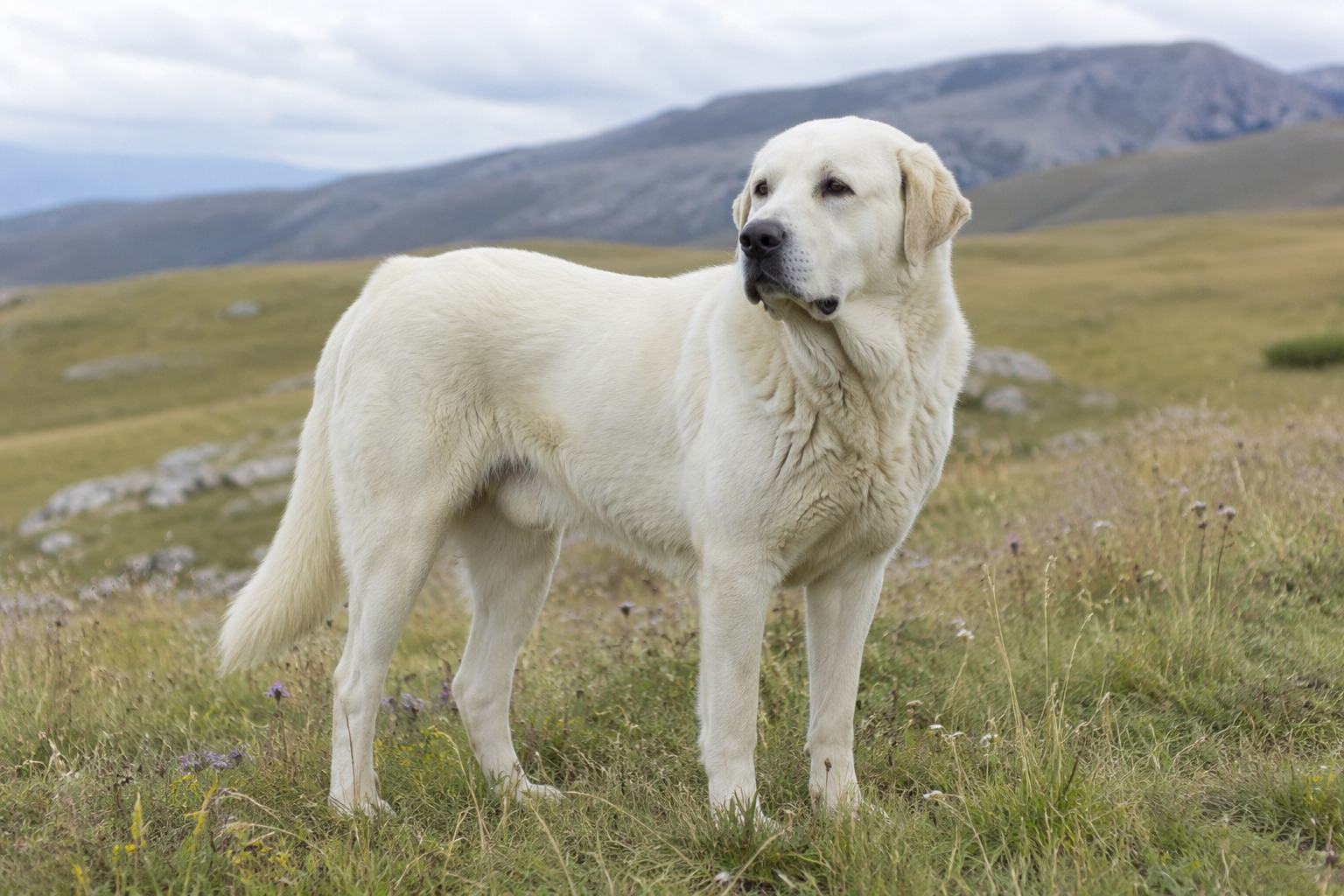
The Akbash is a large, athletic guardian breed with a leaner, more rangy look than some heavier livestock guardians. The overall impression is strong and capable, built for endurance rather than bulk.
Coat is typically white or off-white and may be short to medium length, often with some feathering depending on coat type. The coat provides weather protection and can shed heavily, especially seasonally.
Their movement is usually efficient and ground-covering. A mature Akbash often carries itself with a composed, alert posture, scanning and listening as it moves.
Colors
• Solid White
Health
Akbash dogs are generally hardy, but like many large breeds they can be prone to joint issues such as hip or elbow problems. Keeping the dog lean and fit and avoiding excessive stress on growing joints can help.
Bloat (GDV) is a concern in many deep-chested large dogs. Owners should know the warning signs and discuss prevention strategies with their veterinarian.
As with any breed, responsible breeding and routine veterinary care are important. Ask breeders about health screening and the typical longevity and health issues seen in their lines.
Care
Exercise needs are usually moderate compared to high-energy sporting breeds, but they still need daily movement and purposeful activity. Long walks, property time in a secure area, and calm training sessions help keep them balanced.
Coat care is generally straightforward: regular brushing to manage shedding and keep the coat clean, plus routine ear checks, nail trims, and dental care. Because they can be large and powerful, maintaining nails and handling tolerance is especially important.
Nutrition and weight management matter. Keeping an Akbash lean supports joint health and mobility, particularly as the dog ages.
Training
Training an Akbash is less about tricks and more about building reliable habits, boundaries, and safe behavior around people and animals. They tend to respond best to calm, consistent handling and clear rules.
Because they are independent thinkers, harsh methods often backfire, while overly permissive handling can lead to a dog that makes all decisions. Reward-based training, combined with firm management, usually produces the best results.
Socialization is critical and should be controlled and positive. Teach the dog how to handle visitors, how to settle, and how to disengage on cue. Secure fencing and leash skills are essential, because a guardian breed that roams or confronts others can create serious risk.
Temperament
Akbash dogs are typically calm, serious, and observant. Many are affectionate with their family, but they are usually reserved with unfamiliar people.
Protective instincts are strong, and barking at perceived threats is common. They may patrol boundaries and may react to movement, unfamiliar animals, or visitors unless trained and managed carefully.
They can be selective with other dogs, especially same-sex pairs, and may be intolerant of pushy behavior. Early socialization, controlled introductions, and a stable home routine help reduce conflict and over-guarding.
Lifestyle
Akbash dogs fit best in rural or semi-rural settings with secure fencing and a clear role, such as guarding livestock or property. They are typically not ideal for apartment life or busy neighborhoods where constant triggers can lead to excessive barking or stress.
They do best with owners who are comfortable managing a protective dog and who can control exposure to strangers, delivery traffic, and off-leash dogs. Early planning for visitor routines, gates, and safe containment pays off.
They may do well with respectful children in their household, but supervision is important, especially around visiting kids, because a guardian dog may interpret rough play or unfamiliar people as a threat.
Ownership
Choose an Akbash if you want a serious guardian and you have the experience, space, and management skills to handle a protective, independent dog. These dogs are often most successful when their instincts are directed toward an appropriate job.
Look for breeders or rescues who understand livestock guardian temperament and can describe the dog’s confidence level, social tolerance, and guarding intensity. Meeting adult dogs and discussing real-world behavior is extremely helpful.
Plan for strong containment, ongoing socialization, and a training approach focused on calm control. With the right match, an Akbash can be a loyal, steady protector and a deeply devoted companion.
Interesting Facts
- A livestock guardian breed developed to protect flocks and property with minimal supervision.
- Typically calm and observant, but strongly territorial and protective when it matters.
- Often reserved with strangers and may bark to warn or deter perceived threats.
- Independent temperament means training focuses on boundaries and management, not constant obedience.
- Best suited to homes with secure fencing and enough space to reduce constant urban triggers.
- Like many large dogs, may be at risk for joint issues and bloat (GDV).